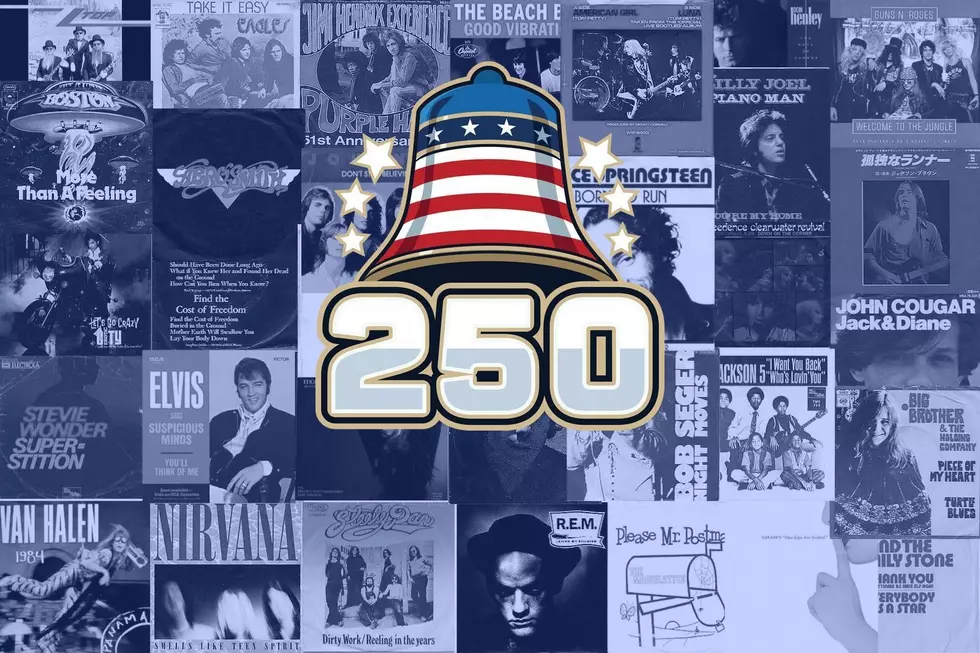
Top 250 American Songs
The Top 250 American Songs don't merely represent the best popular music of the rock 'n' roll era; they also tell the story of American music over the past 70-plus years.
In the list below, selected by the UCR staff, jazz, pop, soul, blues, disco, country, and metal songs join some of rock's biggest names (and some who should have been bigger). Together, they form a fairly comprehensive portrait of the best music to come from the 50 states.
These 250 songs are the sounds of America — the highways, the backstreets, the stadiums, clubs and corner houses; they're the sounds of hope, struggles and freedom. This is America, told in the songs that helped shape its history.
250. Bon Jovi, "Wanted Dead or Alive" (From Slippery When Wet, 1986)
Bon Jovi straddles a steel horse while comparing rock 'n' roll life with the Old West.
249. Foreigner, "Juke Box Hero" (From 4, 1981)
Part American, part British group lays out their rock 'n' roll fantasy in four minutes.
248. Journey, "Separate Ways (Worlds Apart)" (From Frontiers, 1983)
Popularized because of its divisive video of the band playing imaginary instruments.
247. Billy Joel, "New York State of Mind" (From Turnstiles, 1976)
Billy Joel honored his hometown in 1976. A quarter century later, it became a standard.
246. Kiss, "Black Diamond" (From Kiss, 1974)
The last cut on Kiss' debut is an early band showcase and a longtime fan favorite.
245. Bob Seger & the Silver Bullet Band, "Old Time Rock and Roll" (From Stranger in Town, 1978)
Bob Seger doesn't want to hear punk or '70s hard rock. Give him a stack of soulful 45s.
244. Tom Petty and the Heartbreakers, "Breakdown" (From Tom Petty and the Heartbreakers, 1976)
Seven-minute recording jam scaled down to less than three minutes for release.
243. Alice Cooper, "Only Women Bleed" (From Welcome to My Nightmare, 1975)
From Alice Cooper's first solo album after the band split. A ballad about spousal abuse.
242. Aerosmith, "Janie's Got a Gun" (From Pump, 1989)
Aerosmith's comeback era, accented by a message song. From their best post-'70s LP.
241. Jackson Browne, "Late for the Sky" (From Late for the Sky, 1974)
On the point of breakup, the singer looks for a way out. All he finds is heartbreak.
240. The Cars, "My Best Friend's Girl" (From The Cars, 1978)
Handclaps, synths and semi-icy vocals relate a song about hopelessly pining for an ex.
239. John Mellencamp, "Pink Houses" (From Uh-Huh, 1983)
John Mellencamp's sociopolitical makeover starts here in a song about the have-nots.
238. The Impressions, "People Get Ready" (From People Get Ready, 1965)
Curtis Mayfield's Civil Rights hymn is timeless in its arrangement and message of hope.
237. Metallica, "One" (From ...And Justice for All, 1988)
Metallica untangles a mournful anti-war tale over seven and a half intense minutes.
236. Creedence Clearwater Revival, "Have You Ever Seen the Rain" (From Pendulum, 1970)
CCR's best and busiest year spilled over into a new decade with another classic.
235. Guns N' Roses, "Paradise City" (From Appetite for Destruction, 1987)
Axl Rose and the band head to a place where the grass is green and the girls are pretty.
234. Grateful Dead, "Dark Star" (From 1968 single)
Grateful Dead's 1968 single is merely a springboard for the group's most epic live jam.
233. Bob Dylan, "The Times They Are A-Changin'" (From The Times They Are A-Changin', 1964)
In which Bob Dylan admonishes the old guard for clinging to their antiquated ways.
232. Crosby, Stills & Nash, "Suite: Judy Blue Eyes" (From Crosby, Stills & Nash, 1969)
"Judy" was Stephen Stills' girlfriend at the time, Judy Collins, feted in four-part folk-rock.
231. Ramones, "I Wanna Be Sedated" (From Road to Ruin, 1978)
When sniffing glue doesn't do the trick, maybe sedatives will. Ramones go superpop.
230. Simon & Garfunkel, "The Boxer" (From Bridge Over Troubled Water, 1970)
Paul Simon's autobiographical portrait of a man on the ropes, contemplating his fate.
229. Sam & Dave, "Soul Man" (From Soul Men, 1967)
Sam Moore and Dave Prater declare and prove their eternal soulfulness in 2:39.
228. Bruce Springsteen, "The River" (From The River, 1980)
The title track to Bruce Springsteen's first No. 1 album keeps hope amid hard choices.
227. Nancy Sinatra, "These Boots Are Made for Walkin'" (From Boots, 1966)
Frank's daughter puts on go-go boots and then walks all over her no-good man.
226. The Box Tops, "The Letter" (From The Letter/Neon Rainbow, 1967)
Sixteen-year-old Alex Chilton emulates Memphis soul heroes and hits No. 1.
225. The Jimi Hendrix Experience, "Voodoo Child (Slight Return)" (From Electric Ladyland, 1968)
A long jam with friends is pared down with the Experience as the album's closing track.
224. Van Halen, "Jump" (From 1984, 1984)
New sound, new era from a band formerly stuck in the '70s. Their audience grew, too.
223. R.E.M., "It's the End of the World as We Know It (And I Feel Fine)" (From Document, 1987)
R.E.M. welcomes end days with rapid-fire lyrics and a casual shrug. "Boom!"
222. Metallica, "Enter Sandman" (From Metallica, 1991)
Metallica introduces a new era with a song about the makings of a nightmare.
221. Muddy Waters, "Hoochie Coochie Man" (From 1954 single)
A blues classic and part of rock 'n' roll's foundation. A pivotal record for Muddy Waters.
220. Beastie Boys, "Sabotage" (From Ill Communication, 1994)
Beastie Boys recall their punk roots, turn up the volume and let loose for three minutes.
219. The Velvet Underground, "Sweet Jane" (From Loaded, 1970)
From Lou Reed's last Velvet Underground LP, a song about Jack, Jane and submission.
218. Bo Diddley, "Bo Diddley" (From 1955 single)
The song that introduced the namesake beat to the lexicon of rock 'n' roll. Influential.
READ MORE: Top 100 Rock Songs of All Time
217. The Strokes, "Last Nite" (From Is This It, 2001)
The Strokes' breakout song, reinforced by a riff taken from Tom Petty's "American Girl."
216. Prince and the Revolution, "Kiss" (From Parade, 1986)
Prince gets funky again, with help from the Revolution and Purple Rain sequel.
215. Prince and the Revolution, "Purple Rain" (From Purple Rain, 1984)
Prince closes his masterpiece with an epic that channels Hendrix and brings the rain.
214. The Byrds, "Eight Miles High" (From Fifth Dimension, 1966)
The Byrds channel Coltrane, raga and psychedelic textures in their landmark song.
213. Lou Reed, "Walk on the Wild Side" (From Transformer, 1972)
Holly, Candy, Little Joe and others ride a cresting bass line as Lou Reed takes a stroll.
212. The White Stripes, "Seven Nation Army" (From Elephant, 2003)
The 21st century's greatest riff, probably now playing at a sporting event near you.
211. The Lovin' Spoonful, "Summer in the City" (From 1966 single)
New York City folk rockers get dirty and gritty in an ambitious No. 1 single from 1966.
210. Alice Cooper, "I'm Eighteen" (From Love It to Death, 1971)
The Alice Cooper band contemplates impending adulthood, notches its first Top 40 hit.
209. Carole King, "It's Too Late" (From Tapestry, 1971)
Newly single Carole King makes a liberation album, sets a new standard along the way.
208. War, "Low Rider" (From Why Can't We Be Friends?, 1975)
Long Beach multi-ethnic band celebrates close-to-the-ground hot rods in laid-back style.
207. Isaac Hayes, "Theme From Shaft" (From Shaft, 1971)
One of the first blaxploitation themes and one of the best. Talkin' about Shaft.
206. The Jimi Hendrix Experience, "Little Wing" (From Axis: Bold as Love, 1967)
Influential guitar, inspired by Curtis Mayfield, drifts through an ace Jimi Hendrix ballad.
205. Green Day, "Good Riddance (Time of Your Life)" (From Nimrod, 1997)
Acoustic kiss-off from the Bay Area punks turned popular sentimental reminiscence.
204. Madonna, "Into the Groove" (From 1985 single)
"And you can dance," Madonna says at "Groove"'s start, and then gives an occasion to.
203. Red Hot Chili Peppers, "Californication" (From Californication, 1999)
Red Hot Chili Peppers, reunited with John Frusciante, pay tribute to their home state.
202. Michael Jackson, "Thriller" (From Thriller, 1982)
Seventh and last single from Michael Jackson's monster LP. Like others, it was Top 10.
201. The Marvelettes, "Please Mr. Postman" (From Please Mr. Postman, 1961)
Motown's first No. 1, cowritten by the Marvelettes' original lead singer. More to come.
200. The Black Crowes, "She Talks to Angels" (From Shake Your Money Maker, 1990)
The Black Crowes get thoughtful, stepping back from the rock 'n' roll debauchery of their debut to pen a mostly acoustic antidrug song, attaining their first Top 40 hit.
199. Todd Rundgren, "Hello It's Me" (From Something/Anything?, 1972)
Todd Rundgren reworks Nazz's 1968 B-side into a soul-pop gem that offsets Something/Anything?'s studio-as-playground extravagances. A Top 5 hit in 1972.
198. Marvin Gaye, "Inner City Blues (Make Me Wanna Holler)" (From What's Going On, 1971)
Part of the What's Going On song suite covering racism, environmentalism and the Vietnam War. Here, Marvin Gaye tackles poverty and its effects on people in the city.
197. Paul Simon, "You Can Call Me Al" (From Graceland, 1986)
Paul Simon returned from a trip to South Africa with fresh inspiration and new collaborators. "You Can Call Me Al" is a Graceland highlight, all bubbling joy.
196. Steely Dan, "Peg" (From Aja, 1977)
By 1977, Steely Dan was operating as a finely tuned machine, with their immaculately performed and produced jazz-rock second nature. "Peg" is a late-'70s pop gem.
195. Elvis Presley, "Jailhouse Rock" (From 1957 single)
The title track from Elvis Presley's third film, written by Jerry Leiber and Mike Stoller, provides the King with one of his finest movie showcases. Another No. 1 single.
194. New York Dolls, "Personality Crisis" (From New York Dolls, 1973)
Punk has many Ground Zeroes. The opening track on New York Dolls' self-titled debut is one of them. A pivotal song in the widening of musical barriers in the mid-'70s.
193. Lynyrd Skynyrd, "Sweet Home Alabama" (From Second Helping, 1974)
Florida's Lynyrd Skynyrd flies a flag for the South (and Southern rock), and takes a shot at Neil Young, in their homage to the contentious era's most uncompromising state.
192. John Mellencamp, "Small Town" (From Scarecrow, 1985)
John Mellencamp's 1985 survey of Middle America, Scarecrow, includes this celebration of roots and staying with them through generations of change.
191. ? and the Mysterians, "96 Tears" (From 96 Tears, 1966)
Organ-driven garage rock from Michigan pre-punks reached No. 1 during the era of the Beatles. The shaggy "96 Tears" still sounds like little else from its time.
190. The Righteous Brothers, "You've Lost That Lovin' Feelin'" (From 1964 single)
Phil Spector leads Bobby Hatfield and Bill Medley in a symphonic masterclass of push and pull, build and release. Few songs in the history of pop music are this graceful.
189. Green Day, "Basket Case" (From Dookie, 1994)
Encapsulating generational angst and doubt, Green Day self-analyzes and goes multiplatinum. Dookie was an instant '90s totem; "Basket Case" is an entry point.
188. Seals & Crofts, "Summer Breeze" (From Summer Breeze, 1972)
Released near the end of summer 1972, Seals & Crofts' soft-rock classic is both wistful and comforting. Bonus spin: the Seals & Crofts-endorsed Isley Brothers' 1974 cover.
187. Guns N' Roses, "November Rain" (From Use Your Illusion I, 1991)
Nine-minute windswept Elton John-inspired piano ballad from Guns N' Roses and a key track from the band's dual Use Your Illusion albums. Epic in every sense of the word.
186. Sly & the Family Stone, "Dance to the Music" (From Dance to the Music, 1968)
Sly Stone introduces his band, one member at a time, in the group's breakout 1968 song. Bigger things were coming; this was their first flash of greatness.
185. Creedence Clearwater Revival, "Proud Mary" (From Bayou Country, 1969)
At the start of a busy and productive 1969, John Fogerty wrote a new standard about traveling to Memphis and New Orleans, rolling on the river the entire way.
184. Elvis Presley, "Hound Dog" (From 1956 single)
Elvis Presley used Freddie Bell and the Bellboys' 1955 version of Big Mama Thornton's original 1953 "Hound Dog" as his model. It shot to No. 1 as Elvis mania bloomed.
183. R.E.M., "Everybody Hurts" (From Automatic for the People, 1992)
From an album about mortality and fragility, a call for understanding and sympathy on a universal level. There's a sense of oneness to "Everybody Hurts": "You are not alone."
READ MORE: Top 35 Double Albums
182. The Byrds, "Turn! Turn! Turn! (To Everything There Is a Season)" (From Turn! Turn! Turn!, 1965)
The Byrds add 12-string harmonic revelry to Pete Seeger's late-'50s folk song, adapted from the Book of Ecclesiastes. It became their second U.S. No. 1 in December 1965.
181. The Velvet Underground, "Heroin" (From The Velvet Underground & Nico, 1967)
From the Summer of Love, a song about the hardest of drugs over seven-plus minutes of guitar squelch, viola screeches and tumbling drums. It remains a disorienting rush.
180. Iggy and the Stooges, "Search and Destroy" (From Raw Power, 1973)
Three years after the chaotic Fun House, Iggy Pop returned with a new collaborator (James Williamson), a new producer (David Bowie) and this ultra-aggressive song.
179. The Meters, "Cissy Strut" (From The Meters, 1969)
The backbone of New Orleans music and dozens of samples, the Meters' "Cissy Strut" never breaks a sweat as its tight rhythmic interplay shifts from this side to that.
178. MC5, "Kick Out the Jams" (From Kick Out the Jams, 1969)
Michigan revolutionaries instruct the audience to "kick out the jams, motherfuckers!" and then proceed to make a pre-punk racket for nearly three minutes. Savage.
177. Steve Miller Band, "Fly Like an Eagle" (From Fly Like an Eagle, 1976)
Steve Miller first attempted "Fly Like an Eagle" in 1973 as a more freewheeling post-psychedelic workout. Three years later, the song was reworked with a synthesizer.
176. Grateful Dead, "Touch of Grey" (From In the Dark, 1987)
Grateful Dead's only Top 10 single, from the period when they were one of the biggest concert draws on the planet, about aging gracefully. First performed in 1982.
175. Big Star, "September Gurls" (From Radio City, 1974)
Memphis power-poppers Big Star write a quintessential end-of-summer song, inspired by the Beach Boys, and disappear into the sunset for a few forgotten years. Classic.
174. Lynyrd Skynyrd, "Gimme Three Steps" (From [Pronounced 'Lĕh-'nérd 'Skin-'nérd], 1973)
Rather than fight the redneck busting through the door of a local bar looking for his girl, the protagonist of "Gimme Three Steps" opts to hurry out during a stray look away.
173. Ritchie Valens, "La Bamba" (From Ritchie Valens, 1959)
Seventeen-year-old kid from San Fernando Valley, California, who didn't speak Spanish, cuts a Mexican folk song, gives it a rock 'n' roll beat and hits the Top 25.
172. Creedence Clearwater Revival, "Bad Moon Rising" (From Green River, 1969)
What's surfacing on the horizon in "Bad Moon Rising"? John Forgety never says. But it's something dark and menacing, that's for sure, and "it's bound to take your life."
171. Jackson Browne, "The Pretender" (From The Pretender, 1976)
Following the suicide of his wife in 1976, Jackson Browne wrestled with uncertainty on his fourth album, The Pretender. The title song lays out plans for a weary generation.
170. Kiss, "Detroit Rock City" (From Destroyer, 1976)
Kiss pays tribute to one of their early supporters in song, while also acknowledging a fan in another U.S. city who lost his life in a car accident on the way to a Kiss show.
169. John Coltrane, "A Love Supreme, Part 1: Acknowledgement" (From A Love Supreme, 1965)
John Coltrane's four-part, 33-minute meditative suite should be heard in full, but A Love Supreme's nearly eight-minute opening section, with chant, serves as an introduction.
168. Sly & the Family Stone, "Thank You (Falettinme Be Mice Elf Agin)" (From 1969 single)
Released just a few months after Sly & the Family Stone's career-making performance at Woodstock, slinky "Thank You (Falettinme Be Mice Elf Agin)" quickly shot to No. 1.
167. Del Shannon, "Runaway" (From Runaway With Del Shannon, 1961)
Del Shannon walks in the rain, crying, pining over the girl who left him. Then a weird electronic keyboard solo from outer space comes in for a landing. A No. 1 in 1961.
166. Bill Withers, "Ain't No Sunshine" (From Just as I Am, 1971)
Former factory worker's breakthrough song — produced by Booker T. Jones and featuring the Stax rhythm section and Stephen Stills, punctuated by 26 "I know"s.
165. Jonathan Richman & the Modern Lovers, "Roadrunner" (From The Modern Lovers, 1976)
Passionate music fan and Velvet Underground obsessive Jonathan Richman's classic song about his love of AM radio, fast cars and his cherished Massachusetts. Radio on!
164. Gladys Knight and the Pips, "Midnight Train to Georgia" (From Imagination, 1973)
Gladys Knight's man's dreams of making it big in Los Angeles fizzle out, so he heads home to Georgia. She follows. The Pips roll along in the background, riding the train.
163. Madonna, "Like a Prayer" (From Like a Prayer, 1989)
Madonna's big leap forward, nearly six minutes of confronting Catholicism, connecting to the sensual and embracing the artist within. She was even bigger after Like a Prayer.
162. Al Green, "Let's Stay Together" (From Let's Stay Together, 1972)
From the start of Al Green and Willie Mitchell's terrific run of '70s records, a plea for long-term relationships, through good and bad. It's his only No. 1 on Billboard's Hot 100.
161. Freda Payne, "Band of Gold" (From Band of Gold, 1970)
New husband has intimacy issues on his wedding night, prompting the not-so-happy couple to stay in separate rooms. Written and produced by Holland-Dozier-Holland.
160. Stevie Wonder, "Higher Ground" (From Innervisions, 1973)
Written and recorded in a mere three hours, two months before the release of Innervisions, Stevie Wonder's "Higher Ground" sculpts a Moog-assisted funk classic.
159. Cheap Trick, "Surrender" (From Heaven Tonight, 1978)
From Cheap Trick's third album, a song about the divide between World War II parents and their kids. By the end, everyone is spinning Kiss records and having a good time.
158. Fats Domino, "Blueberry Hill" (From This Is Fats Domino!, 1956)
New Orleans R&B and rock 'n' roll giant reworked the 1940 standard "Blueberry Hill" into a 1956 chart topper that helped define post-war youth culture. History-making.
157. Dolly Parton, "Jolene" (From Jolene, 1974)
Inspired by a real event, Dolly Parton wrote "Jolene" about a bank teller who flirted with her husband. For nearly three minutes, she pleads with the woman to leave him alone.
156. Gene Vincent and His Blue Caps, "Be-Bop-a-Lula" (From 1956 single)
Gene Vincent's debut single — all stabbing guitar lines, hiccuping vocals and layers of studio echo — helped stage rockabilly for a larger audience in 1956. His only Top 10.
155. Daryl Hall & John Oates, "Rich Girl" (From Bigger Than Both of Us, 1976)
Daryl Hall & John Oates' first No. 1 was written about an ex-boyfriend of Hall's songwriter girlfriend. He switched the privileged man's gender to make it radio-ready.
154. Chicago, "Saturday in the Park" (From Chicago V, 1972)
Inspired by a day spent in Central Park, Chicago's Robert Lamm wrote his horn-colored group's biggest hit at the time, released, fittingly, in the middle of the summer of 1972.
153. Tom Petty and the Heartbreakers, "Refugee" (From Damn the Torpedoes, 1979)
The leadoff song from Tom Petty and the Heartbreakers' breakthrough album, Damn the Torpedoes, which, according to Mike Campbell, took more than 100 tries in the studio.
152. Janis Joplin, "Me and Bobby McGee" (From Pearl, 1971)
Kris Kristofferson wrote it, and Janis Joplin took it to No. 1. It was recorded a few days before her death in October 1970 for her second solo LP, which also reached No. 1.
151. Beck, "Loser" (From Mellow Gold, 1994)
From the era of self-effacing songs (see: "Smells Like Teen Spirit," "Creep," etc.), Beck's breakthrough song. It was a Top 10 hit from the year alternative rock blew up.
150. Jane's Addiction, "Been Caught Stealing" (From Ritual de lo Habitual, 1990)
For LP No. 2, Jane's Addiction leaned toward the progressive, filling half with lengthy songs about mourning. "Been Caught Stealing" comes from the more visceral part.
149. Steve Miller Band, "Jet Airliner" (From Book of Dreams, 1977)
"Jet Airliner" was written by singer-songwriter Paul Pena, whose version wasn't released until 2000. Steve Miller pairs the song with the brief instrumental "Threshold."
148. Daryl Hall & John Oates, "She's Gone" (From Abandoned Luncheonette, 1973)
'70s blue-eyed Philly soul at its finest, with Hall & Oates waxing poetic over a slow build heartbreak for five minutes. The song's climax is a genuine moment of release.
147. Michael Jackson, "Beat It" (From Thriller, 1982)
Thriller was on its way to becoming a phenomenon in early 1983 when "Beat It" was released as the third single. Fired by an Eddie Van Halen guitar solo, it reached No. 1.
146. Little Feat, "Willin'" (From Sailin' Shoes, 1972)
Lowell George's trucker anthem is more than an ode to "weed, whites and wine"; it's a way of life for road dogs of any type. Little Feat coaxes real sympathy from "Willin'."
145. Eagles, "Life in the Fast Lane" (From Hotel California, 1976)
Hotel California is all about perilous excess, and no song expresses that quite like "Life in the Fast Lane," with its "lines on the mirror" and too-late-to-turn-back-now reasoning.
144. John Prine, "Sam Stone" (From John Prine, 1971)
"There's a hole in Daddy's arm where all the money goes." One of the saddest and most harrowing portraits of addiction recorded. Released as Vietnam vets came home.
143. Joan Jett and the Blackhearts, "I Love Rock 'n Roll" (From I Love Rock 'n Roll, 1981)
Joan Jett took an obscure 1975 track by the London band Arrows, made it a No. 2 hit in the U.S. seven years later and turned "I Love Rock 'n Roll" into her signature song.
142. Talking Heads, "Burning Down the House" (From Speaking in Tongues, 1983)
New York City art-punks ride the new wave to dance-funk pop, inspired by a Parliament-Funkadelic concert. "Burning Down the House" was Talking Heads' only U.S. Top 10.
141. Steely Dan, "Deacon Blues" (From Aja, 1977)
The most elegant song Steely Dan ever made and the closest they came to rewiring jazz to their image. "Deacon Blues" confects over seven-and-a-half flawless minutes.
140. Ike and Tina Turner, "River Deep — Mountain High" (From River Deep — Mountain High, 1966)
The beginning of the end for Phil Spector — an expensive and hours-in-the-making flop that sent the producer into a tailspin. Ike was paid to stay away from the studio.
139. Sly & the Family Stone, "Everyday People" (From Stand!, 1969)
Sly & the Family Stone plead for peace, love and understanding amid social unrest. "We've got to live together," they sing. No. 1 before Woodstock. Then they got bigger.
138. Dionne Warwick, "Walk on By" (From Make Way for Dionne Warwick, 1964)
Dionne Warwick's career launched in 1962 with her debut single, "Don't Make Me Over," written by Burt Bacharach and Hal David. Two years later, they all got bigger.
137. Michael Jackson, "Billie Jean" (From Thriller, 1982)
More than a great song, Michael Jackson's "Billie Jean" broke down the race barrier at MTV in its earliest days. A pivotal cultural moment. It's also the entry point to Thriller.
136. Alice Cooper, "School's Out" (From School's Out, 1972)
Alice Cooper connects with his audience and commemorates the end of the school year and the start of summer. "We can't even think of a word that rhymes!" Rejoice, kids.
135. The Cars, "Just What I Needed" (From The Cars, 1978)
The Cars burst into 1978, simultaneously straddling several genres, including new wave, FM rock and power pop. "Just What I Needed," their debut single, hit No. 27.
134. Glen Campbell, "Wichita Lineman" (From Wichita Lineman, 1968)
Glen Campbell had worked his way up from post-"Tequila" Champs and the Wrecking Crew to a touring member of the Beach Boys to solo star with "Wichita Lineman."
133. Carl Perkins, "Blue Suede Shoes" (From Dance Album of Carl Perkins, 1958)
Two months before Sun labelmate Elvis Presley put out his debut album with "Blue Suede Shoes" as the lead, Carl Perkins released his hit version of the song he wrote.
132. Bobby Fuller Four, "I Fought the Law" (From I Fought the Law, 1966)
Fuller was an El Paso Buddy Holly devotee who scored his biggest hit in 1966 with a song written by the Crickets' Sonny Curtis. He died mysteriously a few months later.
131. Stevie Wonder, "Sir Duke" (From Songs in the Key of Life, 1976)
Stevie Wonder pays tribute to past legends — Count Basie, Louis Armstrong and Ella Fitzgerald among them — in his Duke Ellington celebration. Feel it all over!
130. Buffalo Springfield, "For What It's Worth" (From 1966 single)
Stephen Stills wrote "For What It's Worth" about the 1966 Sunset Strip teen curfew riots, but the song has taken on greater significance as a social protest ever since.
129. Prince and the Revolution, "When Doves Cry" (From Purple Rain, 1984)
The first rumbles from Prince's breakthrough Purple Rain, marked by relationship discord, father issues and avian imagery. His first No. 1 single and album.
128. Devo, "Whip It" (From Freedom of Choice, 1980)
Akron oddballs somehow manage a No. 14 hit about faux optimism on the eve of Reaganism over jittery synths and an atypical rhythm. Bewildering and peppy.
127. Grateful Dead, "Friend of the Devil" (From American Beauty, 1970)
The Grateful Dead's swerve into roots territory in 1970 yielded two of their greatest albums, Workingman's Dead and American Beauty. This song is a career highlight.
126. James Brown, "Papa's Got a Brand New Bag" (From 1965 single)
The roots of funk were planted over two sides of James Brown's 1965 single. It was the Godfather of Soul's first Top 10 hit on Billboard's Hot 100 and his first Grammy win.
125. Television, "Marquee Moon" (From Marquee Moon, 1977)
Never ones to be categorized, New York City's Television uprooted blossoming punk convention and included a 10-minute guitar jam on their landmark debut album.
124. Mötley Crüe, "Kickstart My Heart" (From Dr. Feelgood, 1989)
Talk box guitar highlights Mötley Crüe's 1989 song about a real-life incident in which bassist Nikki Sixx overdosed and was brought back to life. A No. 27 hit on Billboard.
123. Green Day, "American Idiot" (From American Idiot, 2004)
California's Green Day got ambitious on their seventh album, crafting a rock opera about the state of their country at the turn of the century. "American Idiot" explodes.
122. Warren Zevon, "Werewolves of London" (From Excitable Boy, 1978)
Warren Zevon wrote a throwaway song about a werewolf with perfect hair and a proclivity for beef chow mein, and scored the biggest hit of his career. "Ah-hoo!"
121. The Velvet Underground, "I'm Waiting for the Man" (From The Velvet Underground & Nico, 1967)
The protagonist of Lou Reed's "I'm Waiting for the Man" heads uptown to score a fix, drawing suspicion from the locals as the Velvet Underground imitates garage rock.
120. Patti Smith, "Gloria" (From Horses, 1975)
Patti Smith reworks Van Morrison's garage classic, adds lines from her poem "Oath" and delivers an ace career opener: "Jesus died for somebody's sins, but not mine."
119. Talking Heads, "This Must Be the Place (Naive Melody)" (From Speaking in Tongues, 1983)
The closing track on Talking Heads' 1983 album Speaking in Tongues scales back on the rhythmic complexities of their '80s work — a simple pop song by their standard.
118. Jefferson Airplane, "Somebody to Love" (From Surrealistic Pillow, 1967)
When Grace Slick joined Jefferson Airplane in 1966, she brought over a song from her previous band, the Great Society. "Somebody to Love" became their biggest hit.
117. Cheap Trick, "I Want You to Want Me" (From In Color, 1977)
Cheap Trick recorded "I Want You to Want Me" in 1977 on their second album, In Color. Two years later, an electrifying live version from Tokyo hit No. 7, their first Top 10.
116. The Doobie Brothers, "What a Fool Believes" (From Minute by Minute, 1978)
The Doobie Brothers' greatest moment, a blue-eyed soul gem written and sung by Michael McDonald, structured the sound of soft rock for the next couple of years.
115. Bon Jovi, "Livin' on a Prayer" (From Slippery When Wet, 1986)
Bon Jovi's bid for greatness still sounds terrific blasting from the stereo. Talk box, a massive chorus and maybe the greatest key change in music history ably assist.
READ MORE: Top 30 Albums of 1975
114. Grand Funk Railroad, "We're an American Band" (From We're an American Band, 1973)
Michigan quartet provides a diary of their road exploits circa early-1970s, mapping tour stops and groupie encounters. "Out on the road for 40 days," they begin their tale.
113. The Allman Brothers Band, "Midnight Rider" (From Idlewild South, 1970)
From the Allman Brothers Band's second album, a song as old and timeless as the wind. Their roadie helped complete the lyrics. Gregg Allman later had a hit solo version.
112. Dion, "Runaround Sue" (From Runaround Sue, 1961)
Dion DiMucci issues a warning to prospective suitors of his cheating ex. "Runaround Sue" was released at the end of the doo-wop era and as the '60s were getting started.
111. The Supremes, "Where Did Our Love Go" (From Where Did Our Love Go, 1964)
From the start of Motown's golden period, the label's premier girl group stomped and handclapped their way to their first No. 1, with A+ support from the Funk Brothers.
110. Ray Charles, "What'd I Say" (From What'd I Say, 1959)
Gospel R&B, working overtime as a sex rave-up. Ray Charles laid the groundwork for exciting new musical frontiers a few years earlier; here, he unveils his masterpiece.
109. The Black Crowes, "Remedy" (From The Southern Harmony and Musical Companion, 1992)
Chris Robinson said the lead single from the Black Crowes' second album is a reaction to the "war on drugs" campaign. It kicks up a rock-soul storm, no matter the context.
108. ZZ Top, "La Grange" (From Tres Hombres, 1973)
Borrowing a John Lee Hooker riff, the Little Ol' Band From Texas just missed the Top 40 with "La Grange," setting themselves up for bigger things. The album made the Top 10.
107. Alice Cooper, "No More Mr. Nice Guy" (From Billion Dollar Babies, 1973)
Alice Cooper winks at his image, noting the "gloves were off now" after his mother's church group criticized his music and stage act. It was a Top 25 hit from a No. 1 album.
106. Otis Redding, "(Sittin' On) The Dock of the Bay" (From The Dock of the Bay, 1968)
Recorded just three days before he died in a plane crash in late 1967 and released a month after, "(Sittin' On) The Dock of the Bay" became Otis Redding's only No. 1.
105. Four Tops, "Reach Out I'll Be There" (From Reach Out, 1967)
From a transitional Motown year, a Four Tops classic written and produced by Holland-Dozier-Holland, inspired by Cuban, Russian, gospel and Bob Dylan's music. A No. 1.
104. Sly & the Family Stone, "Family Affair" (From There's a Riot Goin' On, 1971)
From Sly & the Family Stone's 1971 masterpiece about the 1970s' awakening, a No. 1 single buried in a '60s come-down haze and Sly Stone's primitive drum machine.
103. Metallica, "Master of Puppets" (From Master of Puppets, 1986)
The beginning of a new era in metal, an antidrug thrash classic structured over eight and a half minutes of intense riffing and soloing. A template for things to come.
102. Bob Dylan, "Blowin' in the Wind" (From The Freewheelin' Bob Dylan, 1963)
The song that put Bob Dylan on the map. A modern folk classic, written as a protest song, soon became a central piece of the Civil Rights Movement. It's still relevant.
101. The Jackson 5, "I Want You Back" (From Diana Ross Presents the Jackson 5, 1969)
Michael Jackson was just 11 years old when he delivered one of Motown's most impassioned vocals on Jackson 5's first single — the first of four straight No. 1s.
100. R.E.M., "Radio Free Europe" (From Murmur, 1983)
R.E.M. rerecorded their 1981 debut single "Radio Free Europe" for their first album, Murmur, in 1983, tightening the arrangement. But "Radio Free Europe" still sounds oblique and mysterious in its new settings, traits shared with the rest of the LP.
99. Guns N' Roses, "Sweet Child O' Mine" (From Appetite for Destruction, 1987)
"Welcome to the Jungle" is a better introduction to Guns N' Roses, but "Sweet Child O' Mine" is the song that made them stars. Two months after it was issued as a single, Appetite for Destruction hit No. 1, more than a year after the LP was released.
98. Bob Seger & the Silver Bullet Band, "Turn the Page" (From Live Bullet, 1976)
First included on the Back in '72 album but better known for its more appropriate live version from 1976, "Turn the Page" is one of rock's great road songs, as Bob Seger and his band pass through one faceless town after another, encountering hope and hostility.
97. The Byrds, "So You Want to Be a Rock 'n' Roll Star" (From Younger Than Yesterday, 1967)
Being in a rock 'n' roll band in 1967 was still pretty novel. The Byrds, with two No. 1s notched, give a tutorial on how to reach the big time: "Just get an electric guitar, then take some time and learn how to play." It's not all limos and screaming girls, though.
96. The Crickets, "That'll Be the Day" (From The "Chirping" Crickets, 1957)
Buddy Holly first recorded "That'll Be the Day" with his previous group in 1956, but it's the newly minted Crickets that gave him his first hit, and No. 1 at that. An early rock 'n' roll staple and part of the first wave of classic songs. Economical with hints of flash.
95. Funkadelic, "One Nation Under a Groove" (From One Nation Under a Groove, 1978)
By 1978, George Clinton's once-separable P-Funk mothership touchstones were indistinguishable. No song blurs the dividing line as much as Funkadelic's "One Nation Under a Groove," which could have easily come out under the Parliament moniker.
94. Cyndi Lauper, "Girls Just Want to Have Fun" (From She's So Unusual, 1983)
A perfect storm of artist, song and milestone cultural moment (the advent of MTV) meeting at the right time in history, "Girls Just Want to Have Fun," Cyndi Lauper's debut single, loads its four minutes with so much revelry that it's hard not to get caught up in it.
93. Martha and the Vandellas, "Dancing in the Street" (From Dance Party, 1965)
From Motown's peak year, one of the label's greatest anthems, a call to arms for a dance party across the U.S.A. Cowritten by Marvin Gaye, "Dancing in the Street" name-checks several big cities, but everyone is invited "across the ocean blue."
92. The Ronettes, "Be My Baby" (From Presenting the Fabulous Ronettes, 1964)
Phil Spector's magnum opus launched a thousand imitators and pop culture references. Hal Blaine's opening drum hits are legendary; the performances, by Ronnie Spector and the Wrecking Crew, are spectacular. One of pop music's all-time greats.
91. Jefferson Airplane, "White Rabbit" (From Surrealistic Pillow, 1967)
With themes borrowed from Lewis Carroll and molded to fit the approaching Summer of Love idealism, Jefferson Airplane celebrates curiosity and the unknown through shifting imagery in 6/8 time. "White Rabbit" was soon a key emblem of the psychedelic age.
90. Van Halen, "Hot for Teacher" (From 1984, 1984)
Van Halen looks forward to school every day, thanks to a sexy teacher. Double-kick drums and typically staggering fretwork from Eddie Van Halen make this a standout cut on the Pasadena group's sixth album. Singer David Lee Roth was soon gone.
89. Johnny Cash, "Folsom Prison Blues" (From Johnny Cash With His Hot and Blue Guitar!, 1957)
Johnny Cash released "Folsom Prison Blues" in 1955 as a single while he was with Sun Records. But it's a 1968 live version, recorded in front of a rowdy and animated audience of inmates at the actual Folsom State Prison in California, that electrifies.
88. Marvin Gaye, "Let's Get It On" (From Let's Get It On, 1973)
After the epochal What's Going On in 1971, Marvin Gaye jumped into the blaxploitation film soundtrack pool with Trouble Man. His next proper album, 1973's Let's Get It On, aimed for more one-on-one engagement. He doesn't beat around the bush either.
87. Simon & Garfunkel, "Mrs. Robinson"(From Bookends, 1968)
Paul Simon's wistful and nostalgic song to the past (originally titled "Mrs. Roosevelt") slightly changed course when Mike Nichols tapped Simon & Garfunkel to write music for The Graduate. A name and title change later, the duo scored their second No. 1.
86. Bob Dylan, "Subterranean Homesick Blues" (From Bringing It All Back Home, 1965)
Bob Dylan begins to break his folk shackles, plugging in with a band and free associating dystopian verse over two and a half electric minutes. "Subterranean Homesick Blues" was the first song to emerge from a whirlwind 15 months.
85. Ted Nugent, "Stranglehold" (From Ted Nugent, 1975)
"Stranglehold" started life during Ted Nugent's days with the Amboy Dukes, when he first came up with the riff based on the familiar Bo Diddley shuffle at a post-show jam session. In 1975, now solo, the song led the Detroit guitarist's debut LP.
84. Sly & the Family Stone, "I Want to Take You Higher" (From Stand!, 1969)
As the flip side to "Stamd!," "I Want to Take You Higher" was already well-known among listeners in 1969. But Sly & the Family Stone's showstopping performance at Woodstock that summer guaranteed the song a place in the annals of music history.
83. The Doors, "Riders on the Storm" (From L.A. Woman, 1971)
The Doors were doing their best to refocus their singer during the sessions for what would be their final album together. The long, moody "Riders on the Storm" was the last song they recorded before Jim Morrison died three months after L.A. Woman's release.
82. Smokey Robinson and the Miracles, "The Tracks of My Tears" (From Going to a Go-Go, 1965)
Smokey Robinson penned many of Motown's gold-standard songs from their halcyon mid-'60s period. None is better than 1965's "The Tracks of My Tears," which he saved for his own group, the Miracles. A lovely performance, too, that guides the heartbreak.
81. Bruce Springsteen, "Atlantic City" (From Nebraska, 1982)
Bruce Springsteen followed his first No. 1 album with a stripped-down and desolate collection of home demos about serial killers and the loss of childhood. Nebraska is best experienced in full, start to finish. "Atlantic City," though, stands on its own.
80. The Allman Brothers Band, "Ramblin' Man" (From Brothers and Sisters, 1973)
Two years after the death of Duane Allman, the surviving members of the Allman Brothers Band regrouped for their fourth album, Brothers and Sisters, with Dickey Betts stepping up his role. His "Ramblin' Man" has become one of their most enduring songs.
79. Simon & Garfunkel, "The Sound of Silence" (From Sounds of Silence, 1966)
First released on Simon & Garfunkel's 1964 debut, Wednesday Morning, 3 A.M., in acoustic form, "The Sound of Silence" was remixed by producer Tom Wilson in the summer of 1965 to catch the rising folk-rock wave — the result: the duo's first No. 1.
78. Iggy Pop, "Lust for Life" (From Lust for Life, 1977)
After the Stooges dissolved, Iggy Pop retreated to Berlin with David Bowie to clean up and start a solo career. The Idiot and Lust for Life arrived within six months of each other; the latter's title song received new life after its inclusion in 1996's Trainspotting.
77. Bill Haley and His Comets, "(We're Gonna) Rock Around the Clock" (From Rock Around the Clock, 1955)
The first rock 'n' roll song to hit No. 1, Bill Haley and His Comets' "(We're Gonna) Rock Around the Clock" was soon to be an emblematic moment of the era, from its use in the 1955 teen movie Blackboard Jungle to the early theme song for TV's Happy Days.
76. James Brown, "Get Up (I Feel Like Being a) Sex Machine" (From 1970 single)
As the '70s began, James Brown entered a new era, working with a new group, the J.B.'s, that emphasized interplay among the guitar, bass and drums, played by Catfish Collins, Bootsy Collins and Jabo Starks, respectively. The funk foundations shift here.
75. Kiss, "Rock and Roll All Nite" (From Alive!, 1975)
Included on Kiss' third album, Dressed to Kill, in 1975, and popularized later that year on the band's landmark Alive!, "Rock and Roll All Nite" was envisioned as a showstopping arena-rock anthem. In the semi-live setting, it achieved its legend.
74. Tom Petty, "Free Fallin'" (From Full Moon Fever, 1989)
Tom Petty's first solo album (though with contributions from some of the Heartbreakers) revitalized both his career and creativity. With coproducer Jeff Lynne helping shape the songs, Full Moon Fever became his best album and best-selling album in a decade.
73. The Cars, "Let's Go" (From Candy-O, 1979)
The first single from the Cars' second album doubled down on the power pop elements of their 1978 debut. A youth anthem made for summer airplay, "Let's Go," released in June 1979, features handclaps and a sing-along refrain: "I like the nightlife, baby."
72. Paul Simon, "Graceland" (From Graceland, 1986)
Mending from a divorce and the critical and commercial disappointment of his 1983 album, Hearts and Bones, Paul Simon headed to South Africa for inspiration. The result boosted his career. Graceland's title track sets on a path of redemption and discovery.
71. The Doors, "Break On Through (To the Other Side)" (From The Doors, 1967)
The Doors' debut single stirred controversy from the start, when a line — "She gets high" — was edited to remove the offending word. The song wasn't a hit (it didn't even crack the Top 125), but it became a key song in the band's catalog over the decades.
70. James Brown, "I Got You (I Feel Good)" (From I Got You [I Feel Good], 1965)
James Brown's biggest hit on Billboard's Hot 100 (No. 3) began life as a song titled "I Found You," which the R&B legend wrote for his backup singer Yvonne Fair in 1962. Brown first recorded "I Got You" in 1964 in a different form. The third time was a charm.
69. Sammy Hagar, "I Can't Drive 55" (From VOA, 1984)
A year before he joined Van Halen, Sammy Hagar released his best solo single, a Top 30 hit, written after he was given a speeding ticket outside Albany for driving seven miles over the limit. "I Can't Drive 55" stayed in live sets after he joined Van Halen.
68. Bruce Springsteen, "Born in the U.S.A." (From Born in the U.S.A., 1984)
The title track from the album that lifted Bruce Springsteen to new levels of popularity has been widely misinterpreted since its debut in 1984. "Born in the U.S.A." is a tale of a Vietnam vet returning home to a country that doesn't want him — intense and stirring.
67. Blue Öyster Cult, "(Don't Fear) The Reaper" (From Agents of Fortune, 1976)
Blue Öyster Cult's Donald "Buck Dharma" Roeser wrote the reassuring "(Don't Fear) The Reaper" about talking through his concerns of an early death. It became the Long Island band's biggest single. Years later, Saturday Night Live zeroed in on the cowbell.
66. Bruce Springsteen, "Thunder Road" (From Born to Run, 1975)
The opening song on Bruce Springsteen's third, breakout album opens a door to a rich new world influenced by Phil Spector, Roy Orbison and the power of the guitar. "Thunder Road" sounds like history being made in 4:49. There was more to come.
65. The Doors, "Light My Fire" (From The Doors, 1967)
Controversial, sensual and one of the first songs to incorporate psychedelic elements, the Doors' "Light My Fire" was a beacon to the Summer of Love. It reached No. 1, heralding a shift in popular music tastes. The seven-minute LP version is stunning.
64. Ramones, "Blitzkrieg Bop" (From Ramones, 1976)
Ramones set off a big bang with their eponymous 1976 debut, and a punk revolution began soon afterward. "Blitzkrieg Bop" opened the LP in signature style: barely two minutes, a handful of basic guitar chords and a fist-pumping chant. "Hey! Ho! Let's go!"
READ MORE: Carole King Albums Ranked
63. Steppenwolf, "Born to Be Wild" (From Steppenwolf, 1968)
As emblematic of the era as any song released in the late '60s, Steppenwolf's "Born to Be Wild" perfectly captured the spirit of the counterculture movement. Its featured spot in the 1969 film Easy Rider bolstered its legacy for decades and generations to come.
62. Kansas, "Carry On Wayward Son" (From Leftoverture, 1976)
Kansas' breakthrough song arrived as the Topeka sextet streamlined their Midwest prog into more accessible FM radio rock. "Carry On Wayward Son" just missed the Top 10 in early 1977; its parent album, the multiplatinum Leftoverture, went Top 5, though.
61. The Kingsmen, "Louie Louie" (From The Kingsmen in Person, 1963)
The garage-rock and frat house classic was written in 1956 by doo-wop and R&B singer Richard Berry, but it's the Kingsmen, a quintet from Portland, Oregon, who gave "Louie Louie" life. Their scrappy, often unintelligible version led to a two-year FBI investigation.
60. Billy Joel, "Scenes From an Italian Restaurant" (From The Stranger, 1977)
Billy Joel drew inspiration from Abbey Road's Side 2 suite for the centerpiece of 1977's The Stranger; "Scenes From an Italian Restaurant" brings together five distinct musical pieces over seven-plus minutes, like a carefully prepared multicourse meal.
59. Blondie, "Heart of Glass" (From Parallel Lines, 1978)
Blondie first gave "Heart of Glass" a shot in 1975, when it was then referred to as "The Disco Song." Three years later, with disco on everyone's minds and at the top of the charts, the group tightened the arrangement and had their first of their four No. 1s.
58. Jerry Lee Lewis, "Whole Lotta Shakin' Goin' On" (From 1957 single)
With Elvis Presley gone, Sam Phillips set out to make his other Sun Records artists just as big. Foremost among them was Jerry Lee Lewis. Recorded in 1957, the wonderfully disordered "Whole Lotta Shakin' Goin' On" became his breakout single, reaching No. 3.
57. Talking Heads, "Once in a Lifetime" (From Remain in Light, 1980)
Same as it never was. Talking Heads changed the blueprints with their fourth LP, Remain in Light, incorporating world rhythms and loops into their thorny new wave. "Once in a Lifetime"'s groundwork video netted much airplay on the nascent MTV.
56. Eddie Cochran, "Summertime Blues" (From 1958 single)
Eddie Cochran's 1958 hit "Summertime Blues" tapped into its demographic with passion: a teen rebellion song about wanting to kick back during summer vacation. A formative part of rock 'n' roll history, the song has been often covered but never better.
55. Aerosmith, "Walk This Way" (From Toys in the Attic, 1975)
A watershed moment for Aerosmith, "Walk This Way" has regenerated several lives since its 1975 debut on Toys in the Attic. Its first appearance as a single didn't chart; a 1976 rerelease went Top 10. And in 1986, Run-D.M.C. ignited Aerosmith's comeback.
54. Journey, "Don't Stop Believin'" (From Escape, 1981)
Journey's best song entered their repertoire around the same time keyboardist Jonathan Cain joined the band. A perfect melding of arena rock and pop songcraft, "Don't Stop Believin'" has endured over the years, entering the pop culture vocabulary.
53. Linda Ronstadt, "You're No Good" (From Heart Like a Wheel, 1974)
Dee Dee Warwick recorded the first version of the oft-covered "You're No Good" in 1963, but it's Linda Ronstadt's molten take a decade later that became the standard. It's her only No. 1, coming from the album (also No. 1) that made her a star in the mid-'70s.
52. Chicago, "25 or 6 to 4" (From Chicago, 1970)
Chicago's first Top 5 single, because of its puzzling title, has been interpreted as a drug song. But writer Robert Lamm, the group's pianist, said "25 or 6 to 4" refers to his writing a song late at night, at 3:35 or 3:34 a.m. Either way, it's one of their best.
51. Booker T. & the MG's, "Green Onions" (From Green Onions, 1962)
Seventeen-year-old Booker T. Jones wrote the famous organ line that runs through "Green Onions" when he was just 17. The M.G.'s — guitarist Steve Cropper, bassist Lewie Steinberg and drummer Al Jackson, Jr. — fleshed out the rest in the studio.
50. Billy Joel, "Piano Man" (From Piano Man, 1973)
Billy Joel's career was close to bottoming out after his first solo album tanked in 1971. The New Yorker retreated to Los Angeles, biding his time, paying bills as a singer in local lounges. "Piano Man" stems from that period and incorporates the real-life characters Joel met there. The song reached No. 25 in 1974, lighting the initial sparks.
49. The Go-Go's, "Our Lips Are Sealed" (From Beauty and the Beat, 1981)
The opening track and lead single on the Go-Go's 1981 debut album Beauty and the Beat was cowritten by Jane Wiedlin and Terry Hall, the former Specials singer now fronting Fun Boy Three, who also recorded "Our Lips Are Sealed" but in a less lively version. It was a fitting introduction to the Los Angeles group: spirited and delightful.
48. Don McLean, "American Pie" (From American Pie, 1971)
New York singer-songwriter Don McLean gives a cultural history lesson for almost nine minutes, weaving the deaths of Buddy Holly, Ritchie Valens and the Big Bopper with the Beatles, Bob Dylan, the Rolling Stones and others as the decades move on. For decades, "American Pie" was the longest No. 1 song (eight-plus minutes) on Billboard.
47. The Isley Brothers, "Shout (Parts 1 and 2)" (From Shout!, 1959)
From the start, the Isley Brothers' "Shout" was designed as a party starter. The nearly five-minute length, divided over two sides of a single, invited stage improvisation with audience participation. The song was the Cincinnati family group's first minor chart hit. Their legend and the song's legacy grew even more over the following decades.
46. Stevie Wonder, "Living for the City" (From Innervisions, 1973)
Cut from the same cloth as other 1970s race-divide commentaries, "Living for the City" doesn't hold back for seven increasingly harrowing minutes as a young Black man from Mississippi heads to New York City for a better life, only to end up in prison through circumstance. Stevie Wonder's vocals are as gritty as his protagonist by song's end.
45. Simon & Garfunkel, "Bridge Over Troubled Water" (From Bridge Over Troubled Water, 1970)
Simon & Garfunkel's elegiac "Bridge Over Troubled Water" already sounded like a requiem before the duo announced their split shortly after the release of the album of the same name in 1970. It's a majestic exit, one of Paul Simon's greatest compositions, buoyed by Art Garfunkel's angelic reading. A final No. 1 that became a new standard.
44. Roy Orbison, "Oh, Pretty Woman" (From 1964 single)
Roy Orbison's second No.1 ("Running Scared" reached the position in 1961) arrived during the initial Beatlemania frenzy and the British Invasion it generated in 1964; "Oh, Pretty Woman" was sandwiched between the Animals' "The House of the Rising Sun" and Manfred Mann's "Doo Wah Diddy Diddy" at the top. That guitar riff has endured.
43. Santana, "Black Magic Woman" (From Abraxas, 1970)
Written by Peter Green and first recorded by his band Fleetwood Mac in 1968, "Black Magic Woman" was transformed by Santana into a signature blend of Latin rhythms (congas, timbales and other percussion instruments figure heavily in the song) and jazz-inflected blues-rock. A highlight of their second album, Abraxas, and a Top 5 single.
42. The Allman Brothers Band, "Whipping Post" (From The Allman Brothers Band, 1969)
First released on the Allman Brothers Band's 1969 debut as a five-minute showcase for singer and songwriter Gregg Allman, "Whipping Post" gained a reputation thanks to a 1971 live version on At Fillmore East that helped seal guitarist Duane Allman's legend — an authentic and pliable slice of Southern blues by a group that lived the hard life.
41. Bob Seger & the Silver Bullet Band, "Night Moves" (From Night Moves, 1976)
Bob Seger gets nostalgic for his teen years in his breakthrough song, a soft-rock reminiscence of a distant past and first lust. "Night Moves," like its narrator, takes its time sifting through memories before reaching a moment of elated realization. Night Moves, the song and album, were Seger's first Top 10s, 15 years after his first single.
40. Jackson Browne, "Running on Empty" (From Running on Empty, 1977)
Jackson Browne hit the road for his fifth album, a concept LP about touring, recorded onstage, backstage, and in hotel rooms and tour buses. Running on Empty's hit title song sets up the work, relating the struggle, fatigue and ultimate joy of performing every night. "Looking out at the road rushing under my wheels," he sings at the start.
39. John Mellencamp, "Jack & Diane" (From American Fool, 1982)
John Mellencamp recorded this little ditty when he was still known as John Cougar; the success of American Fool in 1982 led to increased control of his career as the '80s progressed. The part-acoustic heartland tale "Jack & Diane" also revealed a cultural awakening that developed over the next few years in "Pink Houses" and Scarecrow.
38. ZZ Top, "Sharp Dressed Man" (From Eliminator, 1983)
MTV altered many veteran artists' careers when it debuted in 1981, for better and worse. ZZ Top was one of the '70s FM radio bands that benefited from the emerging use of music videos to promote their music. 1983's Eliminator gave the Texas trio a synth-aided new-wave update; "Sharp Dressed Man" added a new image to the mix.
37. Aerosmith, "Sweet Emotion" (From Toys in the Attic, 1975)
After two albums of increasingly confident blues boogie FM rock, Aerosmith finally struck gold with their third LP in 1975. Toys in the Attic's Side 2 opener eases into its thunderous groove, supplied by talk box, sugar packet and marimba, along with the band's usual setup. "Sweet Emotion" became Aerosmith's first Top 40 single.
36. Eagles, "Take It Easy" (From Eagles, 1972)
"Take It Easy," a cowrite with Jackson Browne, gave the Eagles their first taste of success and helped push their emerging country rock further into the mainstream. The Los Angeles-based group would eventually move away from the genre and onto more gravelly paths, but their 1972 debut LP is a peaceful, easy introduction to their music.
35. Big Brother & the Holding Company, "Piece of My Heart" (From Cheap Thrills, 1968)
Janis Joplin's electrifying take on Erma (sister of Aretha) Franklin's "Piece of My Heart" instantly made her a star. Shortly after the release of Cheap Thrills, she left the San Francisco-based Big Brother & the Holding Company for a solo career that yielded only two albums (one released posthumously) before her death in October 1970 at age 27.
34. Marvin Gaye, "I Heard It Through the Grapevine" (From In the Groove, 1968)
Marvin Gaye's autonomy from Motown begins here. Gladys Knight & the Pips had already had a hit single with Norman Whitfield and Barrett Strong's "I Heard It Through the Grapevine" in 1967 before Gaye — whose version was recorded first — slowed it down and turned it into a moody masterpiece, ushering in a new era for Motown.
33. Stevie Nicks, "Edge of Seventeen" (From Bella Donna, 1981)
The five members of Fleetwood Mac needed a break from each other after the grueling tour in support of 1979's Tusk. Rumours catapulted them to global superstar status, igniting tensions in already-frayed relationships. Stevie Nicks used the break to record her first solo album, the No. 1 Bella Donna. "Edge of Seventeen" is its centerpiece.
32. The Mamas & the Papas, "California Dreamin'" (From If You Can Believe Your Eyes and Ears, 1966)
The sound of hippie idealism and Laurel Canyon precision emerges over two-and-a-half-plus sunshine-bright minutes. The Mamas & the Papas' John Phillips wrote "California Dreamin'" during a cold winter when he and his wife Michelle were living in New York City. The West Coast longing is palpable in the group's radiant harmonies.
31. Carly Simon, "You're So Vain" (From No Secrets, 1972)
There's been much speculation over the decades as to whom "You're So Vain" is about. David Geffen? Warren Beatty? Mick Jagger, who sings backup on the song? Carly Simon has remained quiet on the subject since its 1972 release. One thing is certain: "You're So Vain" is Simon's crown jewel, pop perfection with a killer hook and vocal.
30. Van Halen, "Runnin' With the Devil" (From Van Halen, 1978)
The opening rumble on Van Halen's self-titled debut album in February 1978 signaled the arrival of a new California sound. Anchored by Eddie Van Halen's tightrope-walking guitar and further secured by a mammoth rhythm section, "Runnin' With the Devil" rattles rooms with an intensity that has rarely been rivaled since. A landmark intro.
29. Aretha Franklin, "Respect" (From I Never Loved a Man the Way I Love You, 1967)
Otis Redding wrote and recorded "Respect" in 1965 as a frustrated man's gritty plea to his uncooperative woman; Aretha Franklin transformed the song into a passionate demand for a woman's rights two years later. Since then, "Respect" has become a symbol of the Civil Rights Movement and a universal call to arms for equality.
28. Prince and the Revolution, "Let's Go Crazy" (From Purple Rain, 1984)
From the pulpit, Prince preaches giving in to unguarded urges and kicks off the Purple Rain album with a pop-funk jam culminating in a Hendrix-like guitar solo. Like the LP's first single, "When Doves Cry," "Let's Go Crazy" went to No. 1 in the summer of 1984, as the artist and album continued to dominate the year's playlists. "Let's get nuts!"
27. Elvis Presley, "Suspicious Minds" (From 1969 single)
After several years in the Hollywood and tossed-away soundtrack-album wilderness, Elvis Presley staged a comeback in 1968, supported by recording sessions in Memphis in 1969. A new era was effectively launched with "Suspicious Minds," one of his best singles and his final No. 1, marked by a top vocal performance and strong production.
26. The Byrds, "Mr. Tambourine Man" (From Mr. Tambourine Man, 1965)
Three weeks after Bob Dylan's "Mr. Tambourine Man" appeared on his fifth LP, Los Angeles quintet the Byrds recorded a version as their debut single. Trimmed of all but one verse, and given a radio-ready folk-rock jangle, the song went to No. 1, launching a genre, career and sound. The band would cover more Dylan, but this is their gem.
25. R.E.M., "Losing My Religion" (From Out of Time, 1991)
Three years into their record-breaking deal with Warner Bros. and 10 years after their debut single, Athens, Georgia's R.E.M. had their biggest hit with "Losing My Religion," a typically enigmatic song accompanied by a visually striking music video. The song thrust the quartet into the big leagues without sacrificing their college-music fanbase.
24. Van Halen, "Panama" (From 1984, 1984)
Though best known for introducing synthesizers on some songs, Van Halen's 1984 did include a few guitar- and riff-driven tracks from the band's playbook. "Panama," the LP's third single and a No. 13 hit, is, despite David Lee Roth's lascivious suggestions, about a car. That's Eddie Van Halen's Lamborghini Miura heard revving in the background.
23. Don Henley, "The Boys of Summer" (From Building the Perfect Beast, 1984)
Four years after the Eagles broke up in 1980, Don Henley got serious about a solo career. His second album, Building the Perfect Beast, included songs about social awareness, faded nostalgia and moving on. Its centerpiece, "The Boys of Summer," laments middle-aged indifference and counterculture decals on symbols of decay.
22. Bob Dylan, "Tangled Up in Blue" (From Blood on the Tracks, 1975)
The first years of the '70s saw Bob Dylan seemingly doing his best to dispel all those genius labels that had been placed on him during the previous decade. But as 1975 rolled around, he released his most personal and best LP in years, Blood on the Tracks, whose opener, "Tangled Up in Blue," was partly inspired by his separation from his wife.
21. Elvis Presley, "Heartbreak Hotel" (From 1956 single)
Recorded at Elvis Presley's first RCA session on January 10, 1956, "Heartbreak Hotel" became his first single for the label a little more than two weeks later. By April, it was No. 1 and stayed there for seven weeks. Presley honed his style at Sun, but "Heartbreak Hotel," written about a suicide read in the paper, made him a star.
READ MORE: Top 30 Albums of 1986
20. Guns N' Roses, "Welcome to the Jungle" (From Appetite for Destruction, 1987)
The opening song on Guns N' Roses' 1987 debut, Appetite for Destruction, set a vivid scene. With its snaky riff and back-alley howls, "Welcome to the Jungle" introduced the antidote to hard rock's watering down by MTV-sanctioned neo-glam rockers in spandex and teased hair. GNR, in contrast, was unrefined, dangerous and intimidating.
19. Little Richard, "Tutti Frutti" (From Here's Little Richard, 1957)
With a "A-wop-bop-a-loo-mop-a-lop-bam-boom!" Little Richard helped set off a rock 'n' roll revolution in 1955. "Tutti Frutti" almost instantly became a hallmark of the musical wave started by the new genre's pioneers. In less than two and a half minutes, Little Richard unleashed a firestorm of excited words and music that lit a nascent movement.
18. Aerosmith, "Dream On" (From Aerosmith, 1973)
Aerosmith's power ballad is the highlight of their debut LP and their first Top 10 hit when it was rereleased in 1975. Singer Steven Tyler wrote the lyrics to "Dream On" when he was 14; the music, composed on a Steinway piano in the Tyler family living room, came a few years later — a template for an entire branch of hard-rock music in the '80s.
17. The Jimi Hendrix Experience, "All Along the Watchtower" (From Electric Ladyland, 1968)
Bob Dylan wrote a good song in "All Along the Watchtower" for his 1967 album, John Wesley Harding. The Jimi Hendrix Experience turned it into a great one a year later. Working with the original's basic structure, Hendrix transformed the semi-acoustic dialogue into a strutting folk-blues of an impending doom. It's one of his all-time best.
16. Bruce Springsteen, "Born to Run" (From Born to Run, 1975)
The commercial disappointment of Bruce Springsteen's first two records hung over the recording of his third, Born to Run, in 1974 and 1975. Determined to make a grand statement that echoed both Phil Spector's Wall of Sound and his own '60s heroes, he gave everything to the album's title track, a coming-out proclamation of hope and faith.
15. Crosby, Stills, Nash & Young, "Ohio" (From 1970 single)
Written by Neil Young soon after the May 4, 1970, killing of four students at Kent State University by the National Guard, "Ohio" was one of the era's greatest protest songs, a timely and bitter account of the government's implicit role in the event. Released less than three months after Crosby, Stills, Nash & Young's debut album as a quartet.
14. Marvin Gaye, "What's Going On" (From What's Going On, 1971)
Marvin Gaye declared his creative independence from Motown in 1971 with his socially conscious song cycle What's Going On, which cast a weary eye on inner-city struggles, the Vietnam War, and the racial divide tearing apart the United States. The hymn-like title song remains a period emblem, a query and a plea for peace and understanding.
13. Boston, "More Than a Feeling" (From Boston, 1976)
Boston's first single celebrates the power of hearing a favorite song on the radio and the instant memories that come flooding back in the three and a half minutes. The guitar riff fastens "More Than a Feeling," but every aspect of the song — from production to performance — makes it one of the golden period's most enduring tracks on FM radio.
12. Nirvana, "Smells Like Teen Spirit" (From Nevermind, 1991)
A pivotal moment arrived during the last quarter of 1991, as Nirvana released their second LP, and first for a major label. Nevermind went to No. 1, signaling a shift in the tide of musical tastes as the '90s welcomed more adventurous sounds onto playlists. "Smells Like Teen Spirit" is the anthem that started it. Nothing was the same after this.
11. Steely Dan, "Reelin' in the Years" (From Can't Buy a Thrill, 1972)
Steely Dan hadn't yet developed their reputation as studio-bound perfectionists with an attraction to wry wordplay when they released "Reelin' in the Years" as their second single in 1972. The jazz influences begin to surface, but the song's centerpiece is a scalding guitar solo from Elliott Randall, named by Jimmy Page as his all-time favorite.
10. Tom Petty and the Heartbreakers, "American Girl" (From Tom Petty and the Heartbreakers, 1976)
The closing track on Tom Petty and the Heartbreakers' self-titled debut didn't make much of an impression upon its release in 1977. "American Girl" was first released as the second single from the LP, but failed to chart; a second attempt in 1994 (to support their Greatest Hits album) also went nowhere. Today, the song is their defining work.
9. The Beach Boys, "God Only Knows" (From Pet Sounds, 1966)
From the Beach Boys' best album and one of the most important ever made, maybe the greatest love song ever recorded. There are certainly few as gorgeous as "God Only Knows." Pet Sounds laid the groundwork for so much music that followed, including much of the Beatles' later work. This song is its essence, the heart beating at its center.
8. The Jimi Hendrix Experience, "Purple Haze" (From 1967 single)
Although Jimi Hendrix referred to "Purple Haze" as a love song, its importance to the psychedelic movement and future-thinking music in 1967 cannot be so easily dismissed. The song features one of Hendrix's most celebrated guitar solos, aided by the Experience and Chas Chandler's innovative production. A scene-changing moment.
7. Lynyrd Skynyrd, "Free Bird" (From [Pronounced 'Lĕh-'nérd 'Skin-'nérd], 1973)
Dedicated to Southern rock trailblazer Duane Allman and the rousing finale to Lynyrd Skynyrd's live shows almost from the start, "Free Bird" has taken on mythical affections since its debut on the Jacksonville, Florida, band's 1973 LP. Allen Collins' climactic guitar solo stretches the nine-minute studio take to more than 15 minutes onstage.
6. Chuck Berry, "Johnny B. Goode" (From 1958 single)
Partly autobiographical and thoroughly important to the development of rock 'n' roll in its early years, Chuck Berry's "Johnny B. Goode" is more than a great song; it's a celebration of a scene and a glorification of its promises. The guitar intro was the basis for dozens of excellent songs, from the Stones to the Sex Pistols. "Go, Johnny, go!"
5. Eagles, "Hotel California" (From Hotel California, 1976)
A song about the dark underbelly of Los Angeles glamour from a band that lived through it. Hotel California, the Eagles' fifth LP, explored the despair and desolation at the heart of fame and fast living. The title track is the LP's six-and-a-half-minute nucleus, a survey of the ashes from the morning after, a glimpse into secrets told behind closed doors.
4. Creedence Clearwater Revival, "Fortunate Son" (From Willy and the Poor Boys, 1969)
One of the greatest protest songs of the 1960s came from John Fogerty's frustration at the United States' seemingly futile engagement in Vietnam, as thousands of young soldiers were being sent back to the States in body bags. "It ain't me, I ain't no senator's son," he sings in "Fortunate Son"'s enraged chorus, echoing a nation's collective fury.
3. Stevie Wonder, "Superstition" (From Talking Book, 1972)
Stevie Wonder began his artistic independence in March 1972 with the release of Music of My Mind, but with Talking Book, released seven months later, he definitively asserted it. "Superstition," the album's first single, made his position clear. A funk hallmark riding a wave of Moogs, the song paved a new path for Wonder and his music.
2. Bob Dylan, "Like a Rolling Stone" (From Highway 61 Revisited, 1965)
An unconventional single for its era, with a 6:13 run time, "Like a Rolling Stone" broke the rules of pop music in 1965. The song's enigmatic lyrics, directed at a "complete unknown," are spat with venom toward a person or scene. It's never clear. The song changed the perception of Bob Dylan from folk singer to rock star. He didn't look back.
1. The Beach Boys, "Good Vibrations" (From 1966 single)
Conceived and first workshopped between the end of Pet Sounds' recording and the start of the troubled Smile sessions, "Good Vibrations" was both Brian Wilson's singular masterpiece and the beginning of one of his darkest periods. The Beach Boys leader referred to the long, involved and eventually aborted follow-up to Pet Sounds as a "teenage symphony to God"; "Good Vibrations" encapsulated the concept in three and a half glorious, revolutionary minutes. Wilson spent seven months, nearly 100 hours of tape and $75,000 contructing "Good Vibrations." More than 30 musicians appear on the finished track, from sleigh bells, piccolo and jaw harp to harpsichord, Electro-Theremin and cello. It's a marvel in studio production (modeled after Wilson's idol Phil Spector's Wall of Sound) and deservedly was a worldwide No. 1. After "Good Vibrations," the future looked wide open for Wilson. It wasn't, but for the period when 1966 turned into 1967, there was nobody better.
From Eagles and Boston to Bruce Springsteen and Aerosmith: The Top 100 Albums of the '70s
Gallery Credit: Michael Gallucci
More From Ultimate Classic Rock