50 Years Ago: How ‘Thirty Three and 1/3′ Revived George Harrison’s Career
George Harrison had just released Extra Texture, the most downbeat, down-trodden album of his solo career, and things didn't seem to be getting any better.
He was involved with proceedings on a drawn-out plagiarism charge involving his first chart-topping solo single. Harrison contracted a stubborn case of hepatitis. He was having label problems. He was drinking too much. But something else was going on behind the scenes.
He'd prepared much of the material while on holiday in the Virgin Islands with new friend Eric Idle from the Monty Python comedy troupe. Harrison had found love with new partner Olivia Arias. Ironically, getting healthy after the bout with hepatitis helped him cut back on addictions that were damaging his well-being. At this point, switching from A&M Records to Warner Bros. seemed like a good idea.
Watch George Harrison’s ‘This Song’ Video
George Harrison Finally Bounces Back
Harrison had also begun to put the past in belated perspective, as three songs from his next album had roots in the old days: He began "See Yourself" in 1967 amid public outcry after Beatles bandmate Paul McCartney's admitted to experimenting with LSD. Opener "Woman Don't You Cry For Me" dated back to his 1969 touring days with Delaney and Bonnie.
He'd considered the Rubber Soul-esque "Beautiful Girl" for 1970's All Things Must Pass – but wasn't inspired to actually complete the song until he met Arias. Harrison also connected career dots with "Pure Smokey," a tribute to foundational hero Smokey Robinson, whose "You Really Got a Hold on Me" appeared as a cover tune on 1963's With the Beatles.
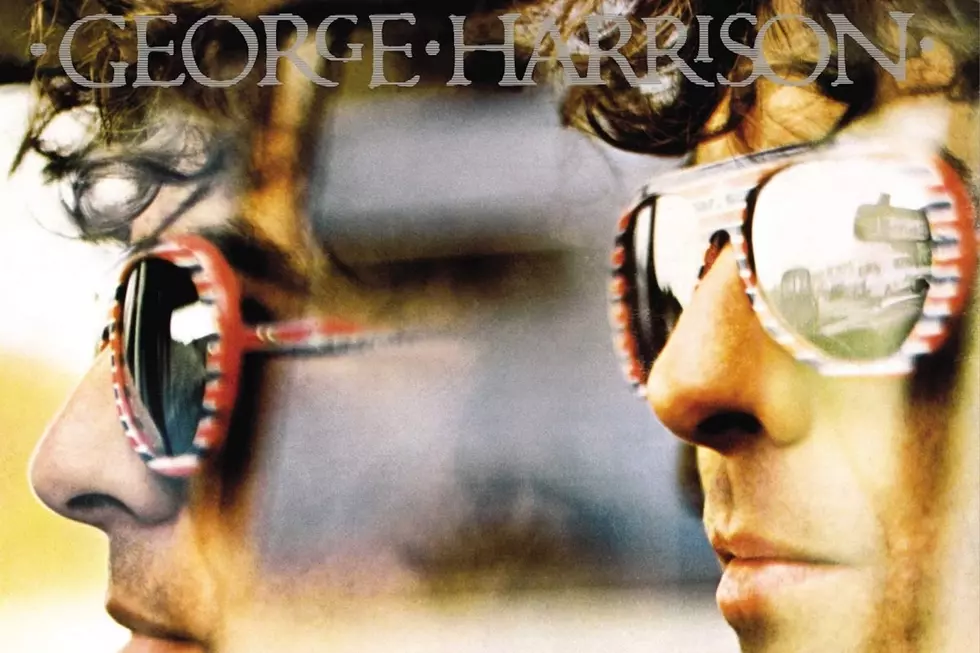
The result was Thirty Three and 1/3, Harrison's most approachable yet still interestingly layered LP of the '70s. Everything was deeply felt, yet he still made room for playfully impish moments. Released in November 1976, the gold-certified No. 11 U.S. hit album's title – a take-off on the RPMs for old vinyl and Harrison's age on the proposed release date – said everything about its whimsical promise.
READ MORE: George Harrison's Top 20 Deep Cuts
Harrison's bad luck hadn't completely dissipated: This record wasn't actually released until his 33 2/3 birthday – and that led to an ugly split with A&M as Harrison's distributor. But Thirty Three and 1/3 made its own case as the comeback album few expected after his dreary mid-'70s output.
George Harrison Confronts a Lost Court Case
Something different, and quite unexpected, would emerge from low-key sessions at Harrison's bucolic Friar Park home with a group of like-minded, deeply sympathetic musical collaborators. That starts with "This Song," the No. 25 U.S. hit lead single.
Harrison somehow found humor in his ongoing disagreements with the copyright holders of the Chiffons' old hit "He's So Fine." Bright Tunes Music went to court over its alleged similarities with "My Sweet Lord" – and claimed a partial decision in their favor.
Listen to George Harrison’s ‘Woman Don’t You Cry For Me’
"This Song" served to highlight how absurd this litigation had become. "I was getting almost depressed," Harrison admitted to the Associated Press, "but I decided I'd take it positively. I wrote a song about it."
READ MORE: Ranking Every Beatles Solo Album
Feeling his oats, Harrison even quoted Madeline Kahn's Lili Von Shtupp, a character in Mel Brooks' uproarious 1974 comedy Blazing Saddles. "It was a laugh and a release," he later told Musician magazine. "Saying, 'This song has got nothing bright about it,' after Bright Tunes publishing sued me, was amusing – at least to me."
The opposing lawyers wouldn't settle for anything less than a total victory. "They kept trying to bring the case back into court," Harrison told Rolling Stone. "They even tried to bring it back into court when I did 'This Song.'" Eventually, Harrison simply purchased the rights to "He's So Fine." The matter was finally resolved.
The Legacy of George Harrison's 'Thirty Three and 1/3'
Light was finally chasing away the dark. This would become the second of three resurgent albums that followed decidedly low moments: All Things Must Pass (after the Beatles imploded), Thirty Three and 1/3 (after everything else did) and Cloud Nine (after giving up on music altogether).
The similarly lighthearted "Crackerbox Palace" was this LP's second single and fared better still, cracking the U.S. Top 20. That's what Harrison called Friar Park, after a quip from British comedian Lord Buckley. The song's whimsical video was filmed by Eric Idle at Harrison's sprawling estate, too.
It all puts a quite different spin (for Harrison anyway) on the line: "Know that the Lord is well and inside of you." "Again, everybody thought I was talking about the other Lord," Harrison told Musician with a chuckle.
Watch George Harrison’s ‘Crackerbox Palace’ Video
Harrison took his guest turn on the Delaney and Bonnie tour after Abbey Road arrived but before the Beatles officially split. It was there that he first began to experiment with the slide guitar – and "Woman Don't You Cry For Me" began to take shape.
"They had a song out called 'Comin Home,' which Dave Mason had actually played slide on," Harrison added. "Delaney gave me this slide bottleneck and said, 'You do the Dave Mason part.' ... I started writing some slide songs on that tour, one of which later came out on Thirty Three and 1/3."
READ MORE: George Harrison's Best Beatles Moments
Unfortunately, by the time "Woman Don't You Cry for Me" was finally released, he'd become quite well-known for slide asides. The song's principal innovation might have seemed like old hat, but it shouldn't have. This is galloping fun.
At the same time, however, both "See Yourself" and "Dear One" were dedicated to guru Paramahansa Yogananda, an original inspiration. Harrison had found his faith again. His mojo, too.
George Harrison Albums Ranked
Gallery Credit: Nick DeRiso
More From Ultimate Classic Rock