How a Private Eye Found the Lost ‘The Who by Numbers’ Tapes
In 2008 a devastating fire at a Hollywood storage building burned an estimated 100,000 master tapes made by artists over six decades across multiple genres.
Due to poor record-keeping It will never be established how much priceless, irreplaceable music went up in flames.
Known victims of the blaze – whose material existed in no other format and is therefore lost forever – included Guns n’ Roses, Elton John, Michael McDonald, Peter Frampton, Muddy Waters, Chuck Berry, Tom Petty, and others including the Who.
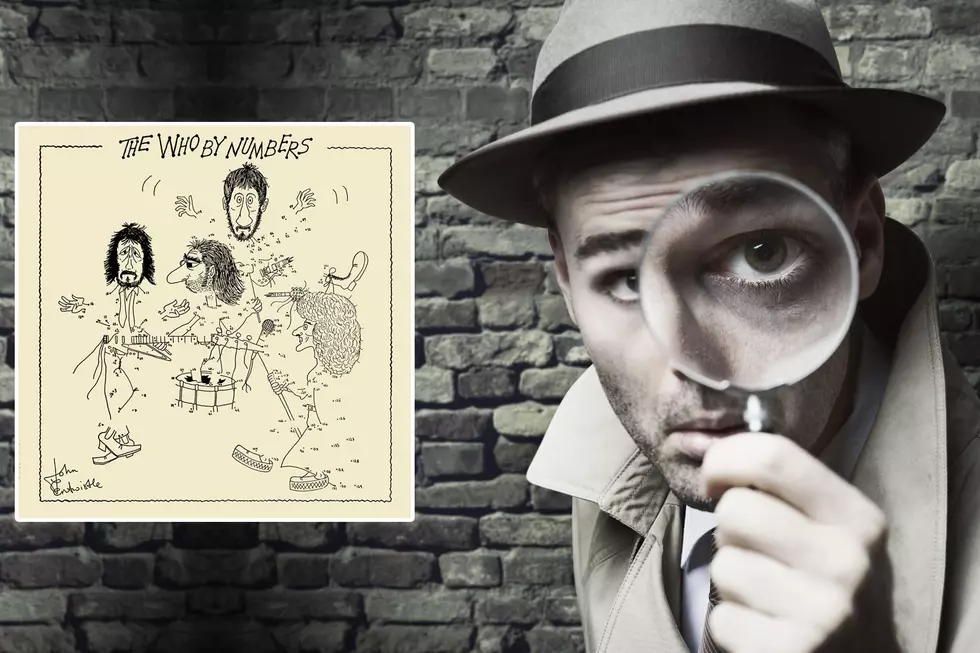
Subsequent legal settlements mean full details will likely remain out of the public eye. But in the case of the Who, a music industry private eye was able to verify a recording that wasn’t destroyed - because it was somewhere else. Those tapes have made the band’s new remastered, extended version of 1975’s The Who By Numbers a reality.
READ MORE: The Who Albums Ranked Worst to Best
Veteran archive specialist Brian Kehew made the discovery in 2020 after being asked to identify tapes left in storage at Hollywood’s Sunset Sound studios. He quickly realized the tapes contained more than a safety copy or a few overdubs, and in fact carried valuable unreleased material.
“The band had been looking for the tapes for years, but this was one place they hadn’t thought to check,” Kehew told the New York Times in 2024. He contacted Pete Townshend and had the reels sent home. It wasn’t the last time he’d be involved in such detective work.
“The obstacle to getting these tapes back in the right hands has always been the time and effort involved,” he said. “But what if there was a facile way to connect everyone that doesn’t involve a lot of hassle or red tape?”
Kehew soon formed Master Taps Rescue with fellow vet Danny White, who himself had previously discovered a cache of more than 20 long-forgotten Buddy Holly tapes. The pair’s aim was to establish an effective method of search and recovery – and in their first six months they secured lost recordings of Jimi Hendrix, David Bowie, R.E.M., Iggy Pop and Billie Holiday.
Is Hunting for Lost Master Tapes a Get-Rich-Quick Scheme?
Tapes can be lost when businesses go under, when fashions change and band popularity changes with them – and even, in one case, when an employee checked out a 20-times platinum album from his label’s archive in the '90s, didn’t sign for it, forgot to return it, and left it in a garage surrounded by old boots and oil cans.
But even in the era of high-priced box sets, recovery isn’t always about financial value. “Even though you have a tape, you don’t own the rights to what’s on it,” Kehew said. “So you can’t expect the moon.
“Labels might pay a small licensing fee to use a tape or track; sometimes they’ll buy it outright. Usually, they offer a finder’s fee or a storage fee — like, ‘Here’s a reward for preserving our tape all this time.’ It scales up and down with the artist and how special the material is.”
He added: “We’re doing this more out of a sense of history; [to] hopefully help find some cool stuff that’s just been collecting dust for decades.”
Reissue producer Cheryl Pawelski won a Grammy for her 146-track set Written in Their Soul: The Stax Songwriter Demos, which she built from lost tapes over 20 years. But the experience was bittersweet: “God knows what’s been thrown out,” she said. “Just thinking about the stuff that probably wound up in landfills in Memphis or Chicago, it makes me very sad.
READ MORE: Top 40 Rock Box Sets
“[W]e’re chasing something that’s very ephemeral in what is essentially a business environment. And I think a lot of music has gotten the raw end of those business dealings.”
Master Tape Rescue’s mission statement is a commitment “to reconnect musicians, producers and labels to their lost and forgotten recordings, unlocking this music for a new generation of listeners.” They note: “[W]e don’t get in the middle of negotiations, we just make the connections between the parties.
Kehew reflected: “I do believe there are hundreds of studios all over the world that have tape vaults that are worth exploring. [T]here are producers or engineers or estates who might have material of real value for artists or labels.
“A lot of stuff is still out there — it’s just a matter of finding it.”
Top 25 Rock Albums of the 21st Century (So Far)
Gallery Credit: Michael Gallucci
More From Ultimate Classic Rock