12 TV Theme Songs From the ’70s That I Can Still Sing Word for Word — and Bet You Can Too
In our house in the '70s, a TV theme song had two jobs: setting the scene for the show, sure, but mostly it was to beckon us from eating Cap'n Crunch at 8 PM in the kitchen and back on the couch before the show started.
I'm a card-carrying Gen Xer (my driver's license says so) who spent most nights (and days) parked in front of the TV, and TV theme songs — particularly sitcom openers — didn't just become nostalgic; they became lodged in my brain permanently. Can I tell you what I had for lunch yesterday? No. Can I still sing every word from a show that's been off the air for forty years? Yes.
Is it just me? Not likely. I'll give you a lyric snippet from 12 theme songs I can sing by heart, and you see if they come rushing back the way they do for me.
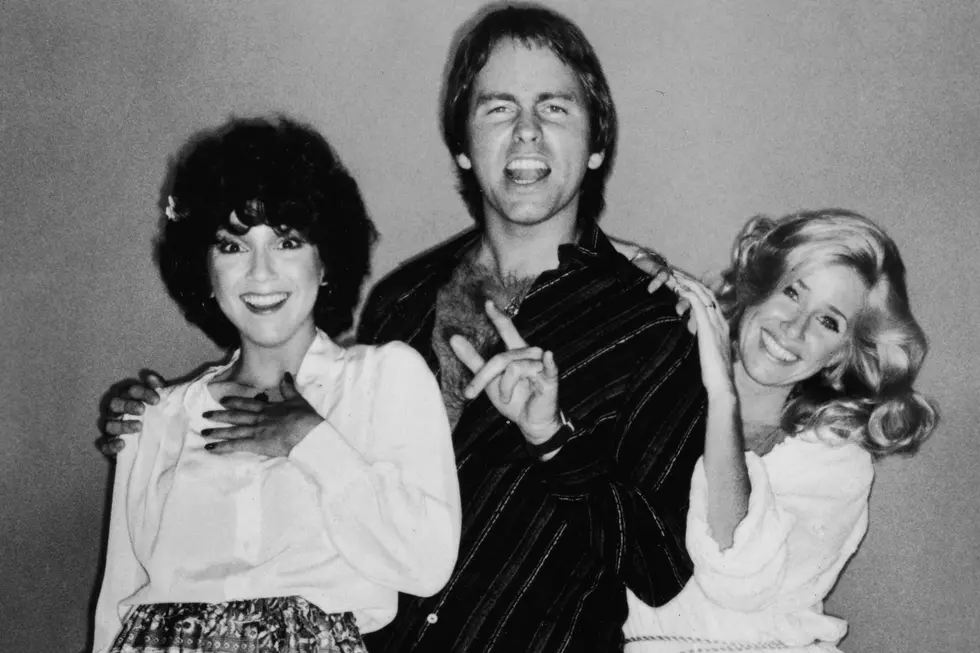
Three's Company (1977–1984)
Come and knock on our door... (Come and knock on our door) / We’ve been waiting for you... (We’ve been waiting for you) / Where the kisses are hers and hers and his...
’70s kids probably shouldn’t have been watching Three’s Company, but hey — it was the ’70s, and we saw it all. Every week brought one big misunderstanding, while “Come and Knock on Our Door” became an anthem for the ages.
The music was written by Joe Raposo, a longtime Sesame Street composer, with lyrics by Three's Company producer Don Nicholl. Maybe that’s why we loved it so much as kids: Raposo also co-wrote the Sesame Street theme and gave us “C Is for Cookie” and "Bein' Green.” We also learned to sing in French, which was très cool: "Laughter is calling for you ... down at our rendezvous..."
The Beverly Hillbillies (1962–1971; Widely Syndicated in the '70s)
Come and listen to my story 'bout a man named Jed / A poor mountaineer, barely kept his family fed / And then one day, he was shootin' at some food...
“The Ballad of Jed Clampett” did something that a few of my picks below did — it explained the show’s entire premise, just in case you forgot. Written by series creator Paul Henning and recorded by bluegrass legends Flatt & Scruggs, the ridiculously catchy tune became a "gen-you-wine" hit (as Jed Clampett would say). It entered the charts in late 1962 and reached No. 1 on Billboard’s country chart in January 1963. It was the first bluegrass recording ever to top the country chart.
I also know every word because we sang this at summer camp by the bonfire like it was a folk song.
The Brady Bunch (1969–1974)
Here’s a story / Of a lovely lady / Who was bringing up three very lovely girls / All of them had hair of gold...
I mean, c'mon. If you don't know this one, there's no hope for you. Probably TV's most iconic theme song (also in a narrative style, like The Beverly Hillbillies) was co-written by show creator Sherwood Schwartz. The song was sung by actual singers in season one's theme, but the second season featured the Brady kid actors singing it themselves (featured above). It is obviously one of the most parodied TV themes — possibly even songs — of all time.
Alice (1976–1985)
Early to rise, early to bed / In and between I cooked and cleaned and went out of my head....
This catchy theme was performed by the sitcom's star Linda Lavin. While it wasn’t common for cast members to sing their own theme songs, All in the Family and the previously mentioned Brady Bunch did it, too. Alice was based on the film Alice Doesn't Live Here Anymore.
Laverne & Shirley (1976–1983)
One, two, three, four, five, six, seven, eight / Shlemiel, schlemazel / Hasenpfeffer Incorporated / We're gonna do it...
“Making Our Dreams Come True,” sung by Cyndi Grecco, was so aspirational that it made ’70s kids want to chase their dreams — even if that meant moving to Milwaukee and working in a brewery.
MORE: 71 Rarely Seen Candid '70s Celebrity Photos
The opening chant — “Schlemiel! Schlimazel! Hasenpfeffer Incorporated!”— became a playground battle cry, even though kids had absolutely no idea what any of it meant. If you didn't link arms and Schlemiel your way through throngs of kids playing Red Rover, were you even a '70s kid?
One Day at a Time (1975–1984)
This is it; this is life... / The one you get / So go and have a ball / This is it, straight ahead and rest assured / You can’t be sure at all...
While I assumed this boppy "This Is It" was sung by one of the sitcom’s stars — it really did sound like Valerie Bertinelli and Mackenzie Phillips — it was actually performed by singer Polly Cutter.
The premise was pretty groundbreaking for 1975: a divorced single mom raising two teenage daughters. That made perfect sense, since it came from Norman Lear’s socially aware sitcom canon, alongside All in the Family, Maude and The Jeffersons, among others.
The Jeffersons (1975–1985)
Well we're movin' on up / To the east side / To a deluxe apartment in the sky / Movin' on up...
Fun fact I didn't realize until now: This iconic theme was sung by Ja’Net DuBois, who played Willona on Good Times (and whose character adopted Penny, the character played by Janet Jackson). The song quickly became an anthem for anyone dreaming of something better, but mostly sung by kids like me who sang it while climbing to the top of the jungle gym.
The opening was filmed outside a luxury apartment building on Manhattan’s Upper East Side — but the moment they walk through the doors, they’re suddenly entering an entirely different building in California. You can see both in my look at famous TV homes and what they look like today.
All in the Family (1971–1979)
Boy the way Glenn Miller Played / Songs that made the Hit Parade / Guys like us we had it made / Those were the days...
“Those Were the Days” was performed on camera by Carroll O’Connor (Archie) and Jean Stapleton (Edith), who played the piano as they sang. Its wonderfully tinny, unpolished sound perfectly set the tone for the show’s unfiltered approach to family life and social issues.
How perfectly was it executed? Until creating this list, I thought the song was an old standard from the ’40s or ’50s. Nope — it was written specifically for the show.
Happy Days (1974–1984)
Sunday, Monday, Happy Days / Tuesday, Wednesday, Happy Days / Thursday, Friday, Happy Days / Saturday, what a day / Rockin all week with you...
While the first two seasons of Happy Days opened with Bill Haley & His Comets’ legendary “Rock Around the Clock,” Season 3 introduced the custom-written “Happy Days” theme performed by Pratt & McClain. Deliberately styled after the doo-wop and early rock ’n’ roll of the show’s era, it endlessly confused a generation of children who assumed Happy Days had actually been made in the 1950s. The song even became a hit of its own, reaching No. 5 on the Billboard Hot 100 in 1976.
The theme song wasn’t the only major change. The first two seasons were filmed as a single-camera comedy with a laugh track added afterward. Beginning with Season 3, the show switched to a three-camera setup before a live studio audience. Fonzie was also a supporting character in the early episodes and often wore a light-colored windbreaker instead of his iconic black leather jacket.
The Mary Tyler Moore Show (1970–1977)
Who can turn the world on with her smile? / Who can take a nothing day, and suddenly make it all seem worthwhile? / Well, it’s you, girl, and you should know it...
“Love Is All Around” sounds like an existing song repurposed for TV, but Sonny Curtis wrote it specifically for The Mary Tyler Moore Show after seeing only a brief description of the series. Beginning with Season 2, its lyrics about whether Mary could actually make it on her own became a more confident statement that she was going to make it after all. Curtis was a former member of Buddy Holly and the Crickets and died in 2025. He also wrote "I Fought the Law."
Gilligan's Island (Widely Syndicated in the '70s; originally 1964–1967)
Just sit right back and you’ll hear a tale / A tale of a fateful trip / That started from this tropic port...
Co-written by creator Sherwood Schwartz (who also did the same for The Brady Bunch), it's hard to believe this show was actually a '60s series, since it was everywhere in the '70s, particularly after school. Like The Brady Bunch and The Beverly Hillbillies, the entire story was told in the song.
I recall being genuinely annoyed that in Season 1, the Professor and Mary Ann got reduced to "...and the rest" while everyone else got named. Turns out I wasn't the only one — Bob Denver (Gilligan himself) apparently felt the same way and pushed to get the song redone for Season 2 so they'd finally get their names in the credits too.
WKRP in Cincinnati (1978–1982)
Baby, if you’ve ever wondered / Wondered whatever became of me / I’m livin’ on the air in Cincinnati...
I recall thinking that the WKRP in Cincinnati theme was actually sung by Richard Sanders, who played Les Nessman on the series. It does sound like him. Apparently, everyone thought the same thing, even to this day. It is, however (officially, at least), sung by Steve Carlisle.
Another noteworthy piece of trivia — true to WKRP's rock-leaning format, the end credits feature a completely different song, a hard-rocking, mostly unintelligible track written and shouted by Jim Ellis.
UP NEXT: Every 1970s Living Room Had These Things
Gallery Credit: Stephen Lenz
More From Ultimate Classic Rock