The Hollies Suddenly Break Up After 63 Years
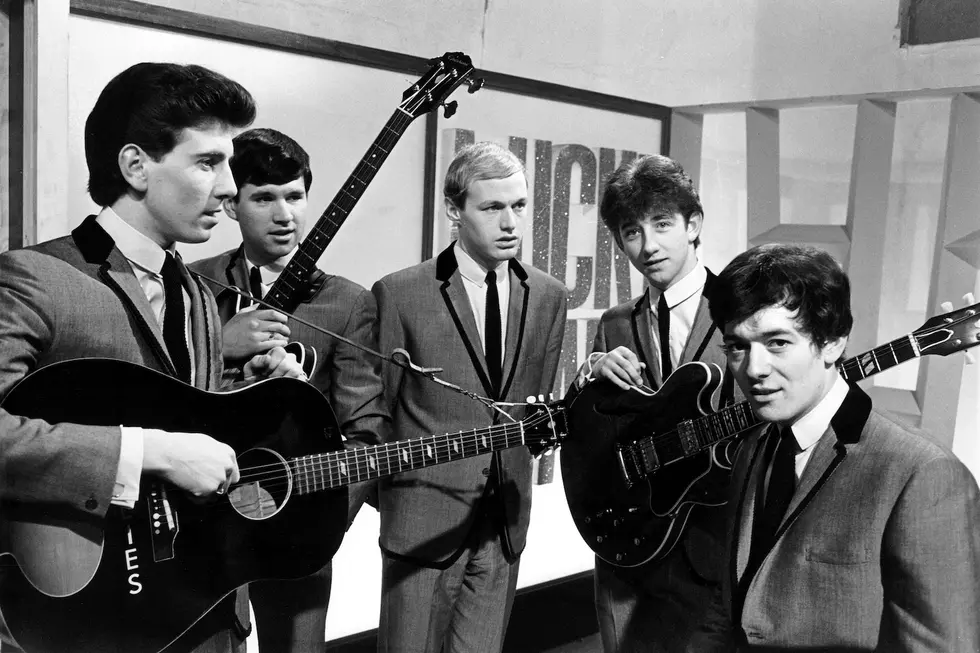
The Hollies have come to an end after more than six decades, following the sudden retirements of the last two remaining members from their classic era.
Guitarist Tony Hicks and drummer Bobby Elliott both joined in 1963, soon after Allan Clarke and Graham Nash co-founded the group. The Hollies ultimately released 23 studio albums and 67 singles on their way to Rock & Roll Hall of Fame honors.
Hicks, 80, and Elliott, 84, are now saying goodbye. “Due to health reasons, Tony has decided to step away from touring,” the Hollies said in a brief statement. “Out of respect for Tony and everything they have shared throughout their remarkable journey together, Bobby has also decided to retire from touring.
“After more than six decades, the Hollies’ touring career will come to a close with immense gratitude to the fans who have supported them around the world.”
When Did the Hollies Break Through?
Elliott and Hicks had been in a teenage band called the Dolphins when they attracted the attention of Clarke and Nash. “The Hollies were forming and they wanted a guitar player,” Elliott later remembered, “so their manager kept coming and pestering us: ‘Tony, you must come and join this new band, the Hollies. They’ve got an audition at Abbey Road Studios!’” Hicks agreed to join – but only if Elliott did, too.
Clarke was also school friends with Nash, but they quickly developed as a writing trio following Hicks' arrival. The Hollies went on to score a long string of hit songs between 1966 and 1974, including 10 Top 40 singles, to become one of the most successful bands from the British invasion years in American music.
Watch the Hollies Perform ‘Bus Stop’
“Bus Stop” marked their No. 5 U.S. breakthrough in 1966, after the Hollies had already collected eight U.K. Top 10 singles. Then Nash met Stephen Stills and David Crosby during a Hollies tour of America in 1966.
They'd go on to form a groundbreaking eponymous trio, after a fateful moment singing together on the Stills composition “You Don’t Have to Cry.” Nash said he and the others “stopped, we laughed, because we knew our lives had changed.” “You Don’t Have to Cry” was later included on 1969's Crosby Stills and Nash.
“I knew I had to go back to England, leave the Hollies, and follow that sound,” Nash told On magazine, “and that’s what I did. … I believe it was the right choice.” The Hollies, ultimately led by stalwarts Hicks and Elliott, would continue on for decades.
How the Hollies Built a Lasting Legacy
Subsequent Hollies lineups hit with “He Ain’t Heavy, He’s My Brother,” the platinum-selling “Long Cool Woman in a Black Dress” and and the gold-certified “Air That I Breathe.” They were recognized by the Rock Hall in 2010, after Clarke's own retirement. The Hollies had moved forward afterward with singer Carl Wayne of the Move and then later Peter Howarth.
READ MORE: When the Hollies Recorded a Hit with the Unknown Elton John
Hicks said the Hollies brought a familiar passion to their modern-era performances. “That’s the best life for me. So that’s something I don’t want to let go!” he told Terrascope in 2001, with a laugh. “I’ll have to one day – time’s rolling on – but for now, it’s still great fun.”
22 British Acts That Didn't Break Big in America
Gallery Credit: Allison Rapp
More From Ultimate Classic Rock