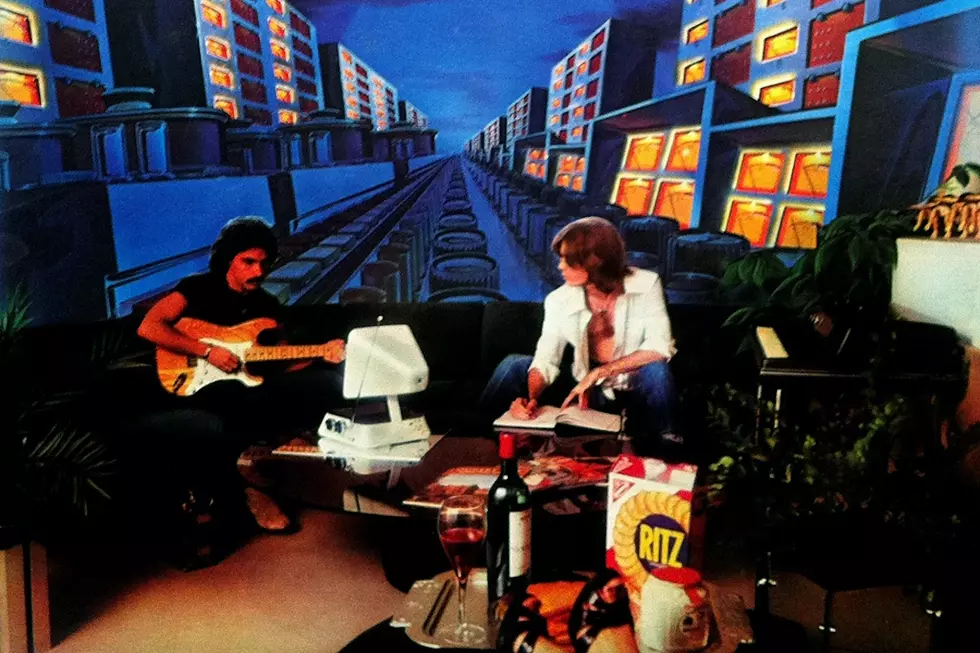
Why Hall and Oates Became So Restless on ‘Bigger Than Both of Us’
“Rich Girl” was the chart-topping hit from Daryl Hall and John Oates' Bigger Than Both of Us. But “Do What You Want, Be What You Are,” a deep cut from the same August 1976 album, better encapsulated the duo's career aesthetic.
“That," Oates said in 2013, "is who we are."
Hall and Oates’ first studio project had focused on singer-songwriter folk; their next one was more glammy. Restless still, Bigger Than Both of Us began a period in the late '70s where they tried on a number of other musical hats.
'We Were Completely Outside the Box'
“If you look back at our careers, we’ve done weird stuff," Oates added. "We were completely outside the box in a lot of ways — from Whole Oats and Abandoned Luncheonette to War Babies then to recording in L.A. and wearing makeup, then hard rock — and pop. We look at ourselves as musicians, and we don’t really care about categories. The world does, and we try to work with it.”
They'd found earlier Top 10 success with "Sara Smile" from 1975's Daryl Hall and John Oates, but didn’t consider resting on those laurels for Bigger Than Both of Us. Instead, they celebrated Frankie Valli with "Back Together Again," a largely forgotten No. 28 hit; took a nasty turn on Oates' "You’ll Never Learn"; got bluesy with "Room to Breathe"; and saw Hall stretch out over the multi-movement "Falling" to close things.
Listen to 'Do What You Want, Be What You Are'
Even the biggest moment on Bigger Than Both of Us, its snarky smash single, offered a twist. "Rich Girl" was actually written about a silver spoon-type male, one of co-writer Sara Allen's boyfriends.
"But you can't write, 'You're a rich boy,' in a song," Hall admitted to Rolling Stone. "So I changed it to a girl."
READ MORE: How Hall and Oates Perfected New Wave Soul
For the follow-up LP, Hall and Oates turned away from both folk and R&B, exploring a darker, edgier vibe. By the dawn of the new decade, they'd hit upon a winning mixture of brisk New Wave and sleek soul.
Some of the earlier musical side trips had been successful, some not, but all of them found Hall and Oates doing what they wanted – and being, without a doubt, themselves. "Had we not done all that stuff, we would never been able to do what we did in the ‘80s," Oates told Goldmine. "We had all that behind us and we said, 'Okay, we know how to make records. We know the kind of records we want to make.'"
Top 200 '70s Songs
Gallery Credit: UCR Staff
More From Ultimate Classic Rock