The Stories Behind the Most Famous ‘Ferris Bueller’s Day Off’ Songs
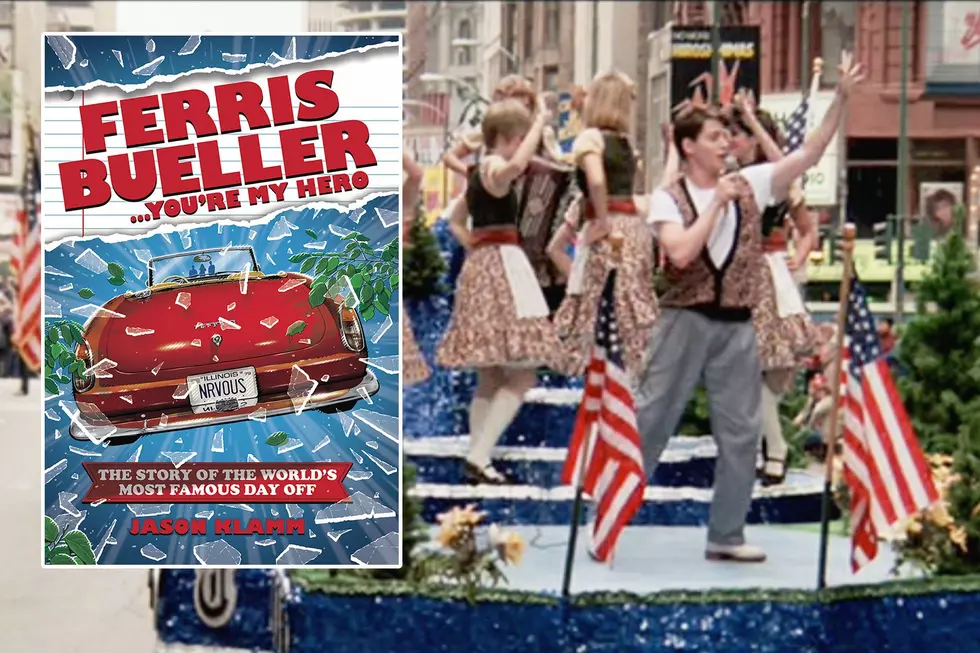
Just in time for the 40th anniversary of Ferris Bueller's Day Off, author Jason Klamm is sharing the definitive behind-the-scenes story of the classic movie with Ferris Bueller... You're My Hero, available at your favorite bookstores now.
Featuring over 120 new and exclusive interviews, the book takes readers behind the scenes of the movie's creation, revealing that Hughes shot over a million feet of film before the movie was even halfway done, and then navigated mounting studio panic while transforming controlled chaos into cinematic magic.
Below you will find the stories behind five of the film’s most iconic songs, via excerpts from Ferris Bueller... You're My Hero:
“Oh Yeah” (Yello)
Practically a tone poem for Ferris Bueller’s Day Off, “Oh Yeah” today immediately evokes the movie, or at least the scene where Ferris convinces Cameron to abscond with his dad’s car. The two are indivisible.
There are plenty of elements at work to explain this, but the fact that it highlights the car-as-sex element (there’s the sound of a woman’s voice saying “Oooh!” underneath the squeak Ferris makes as he rubs his finger along the fender of the Ferrari) is perhaps the most egregiously American one. Ironic, considering it’s a creation from the minds of an experimental Swiss pop band.
Yello formed in 1979 when Boris Blank found himself dissatisfied with the bands he was in. “I started making music alone because I no longer found it fulfilling to rehearse with a band in a basement,” Blank says.
He and mentor Carlos Perón wanted to meet their American idols, the art collective and music act known as The Residents, and so headed to San Francisco.“We know who they are, but we never told anybody else,” Blank says of the group best known for wearing helmets that resemble eyeballs with top hats on them.
“They liked our music, so they offered us a contract.” They then found themselves a Zurich-based producer who liked their music, but who didn’t want to produce anything without vocals. They needed a lead singer, and with the introduction of Dieter Meier (and the eventual departure of Perón), the band Yello became what it has now remained for over 45 years.“I was always into sounds. I’m even today, more a mood maker than a musician,” Blank says.
With a library of hundreds of thousands of sounds and a photographic memory, he has no shortage of starting points and a lengthy back catalog of unreleased tracks. “As Dieter says, ‘You will do music until you’re in a coffin. You will sample the hammering of the nails into the top and make a new track out of it.’ Music is my life. Music is the air for me, which I breathe.”
Meier, as the ostensible front man, if only because he’s the singer, is also one of Yello’s motivating factors. “He is always the guy who is pushing me,” Blank tells me. “Otherwise I would be this guy sitting like a monk in a studio and never seeing the daylight.”
Unprompted, in a separate conversation, Gotch tells me, “We had this joke in the office that Boris was sort of chained up in Dieter’s castle in Switzerland, chained to the mixing desk and never allowed to see daylight.” The results can’t be denied, though. “If you listen to the production, blindingly good.”
That back catalog was already growing in the early ‘80s, though Blank was never album-oriented. The “doo bow-bow” sound and the bassline of “Oh Yeah” were the original seeds of the song, which Blank presented to Meier. Meier attempted to add some Swahili to it at first, but that didn’t work—Meier, often the group’s lyricist, asked Blank for suggestions.
Blank then immediately went to a feeling—that of pure relaxation, imagining himself sitting on an island in the South Pacific with an ice cold drink in his hand.
He asked Meier what he’d say in that scenario. “Oh yeah, oh yeah, beautiful,” Meier said. They worked on the track with these minimalistic lyrics as their starting point, not intending for it to be an album track. The “ch’k-ch’kaahh” sound was intended just as a vocal emulation of something like a hi-hat.
The presence of “Oh Yeah” anywhere in this commercial American film is telling of Hughes’ love for interesting, sometimes avant-garde music. This song, with its sparse lyrics and unusual electronic composition could possibly end up in a museum entirely on its own merits.
Music author and journalist Annie Zaleski says, “Its mostly instrumental nature ensures it already sounds like a movie score, for starters. But it doesn’t sound like anything else released during the 1980s, meaning it stands out from other synthesizer-heavy songs.”
While some of the tracks end up in the movie sans vocals, or via a different mix, “Oh Yeah” as we hear it in the film is unchanged from the original. “It was absolutely the authentic track as we gave it to him.”
It would quickly become an album track, too, at the insistence of their label, and it continues to be used in commercials and films—ones that want an immediate psychological link to Ferris Bueller’s Day Off. The only exception being the following year, when The Secret of My Success (also edited by Paul Hirsch) used the song, too (Hughes’ music staff were none too happy about this, unfounded though their fears might have been in hindsight).
“‘Oh Yeah’ just sounds like the 1980s, of a sonic piece with the music of Pee-wee’s Playhouse and the quirky synth-pop that was popular during that decade,” Zaleski says. “Mood-wise, it’s sassy, mysterious, mischievous, and modern—just like Ferris. That’s one major reason the song is so closely associated with the movie.”
She points out that the film, on the other hand, can’t really be thought of without the song, either. “It’s as much of a plot device as any action by the characters; in fact, the song is so expressive, it’s like an emotional punctuation mark on a scene.”
Blank’s perspective on the song is all about its simplicity and positivity: “It’s never cynical. It’s just sort of beautiful, and even the rhythms and the instruments are still modern.” It sticks around, for a reason, he says: “It’s still alive because it’s original and it doesn’t try to be a hit.”
“Please, Please, Please Let Me Get What I Want” (The Dream Academy)
Had Nick Laird-Clowes of The Dream Academy known that Ferris Bueller’s Day Off was inspired by Alfie and Blow-Up, things would have been different—he’d have been even more eager to have his music in it.
About 15 minutes into our interview, he stands up to show me his outfit. “My defining wardrobe is what David Hemmings wears [in Blow-Up].” He stands up to prove it; he’s in slim white jeans, a thick black belt, and a white button-down shirt with red vertical and horizontal stripes with the sleeves cuffed just below the elbow, an absolute dead ringer for Blow-Up’s Thomas, sans the selfaware sneer and the camera.
He’s usually wearing a corduroy jacket, too, he says, but this is casual. On top of that, “Alfie’s got the tune,” he says, speaking of the film’s Burt Bacharach/Hal David-penned theme.
Tarquin Gotch was The Dream Academy’s manager when Ferris got going, but that’s not where it all starts. “I’d met him when I was about 14,” Laird-Clowes says. He had met a couple girls, where he lived in Hampstead Heath, who knew of this guy down the street who had some Graham Parsons albums they could all go listen to.
“He was a mustachioed, curly-haired hippie when I met him, and I was super impressed.” When he was 17, Laird-Clowes formed a three-piece band called Alfalpha with two brothers, and by 19 they’d already sung backup on a T. Rex album.
“We weren’t that good,” Laird-Clowes says. Around that time, one of the brothers proposed that they get a roadie and driver, since he knew someone who wanted into the music business—it had been a while, but this potential roadie was Tarquin. “I said, ‘Can he drive?’ And he said, ‘No.’ I said, ‘Then he’s not gonna be our driver.’”
They were about to go out on their first music tour with Dr. Hook & the Medicine Show and couldn’t take the chance. The brother insisted Gotch would learn, and six months later, he showed up with bells on and did everything he promised he would.
EMI dropped the band after their second album, which meant they parted ways, but Laird-Clowes kept on writing songs. He was part of another band called The Act, and as that band faded away after one album, he formed The Dream Academy with Gilbert Gabriel and Kate St. John.
The next time Laird-Clowes would meet up with Gotch, the latter was managing acts like The English Beat, and while he couldn’t put them on his roster at the time, he did give The Dream Academy £5,000 to produce a song of theirs, which he then shopped to labels in America. He returned with good news.
“He called us in and he said, ‘You’re in a bidding war. Sony and Warners want the record.’ We just couldn’t believe it.” Gotch then hopped on board as their manager, and they signed to Warner Brothers, on a slate alongside Madonna, Prince, Neil Young, and countless others.
The relationship was mutually beneficial and helped land The Dream Academy on Saturday Night Live in December of 1985—perfect timing to get their record in Hughes’ hands. “Please Please Please Let Me Get What I Want” was the first cover anyone had released of a Smiths song, poised to be a Top 10 hit, seemingly, but it didn’t do nearly as well as the band had hoped. “Tarquin said, ‘Well, John loves it, and we might put it in the film.’”
Geoff Travis of Rough Trade Records (The Dream Academy’s label, who had also signed The Smiths), played “Please Please Please…,” a B-side to “William, It Was Really Nothing” to the group. “They were extraordinary, sort of poetic lyrics,” Laird-Clowes recalls. This was not the consensus view in the industry—words like “miserable,” “droning,” and “terrible” were being thrown around.
The Dream Academy put together their cover over a weekend, recording it “almost live,” to preserve the spontaneity of the quick turnaround. “We felt we could show…that these guys were great songwriters. So that was our aim, you know, to put the spotlight on.”
The original track for the museum scene is shrouded in 40 years of mismatched memories, like so much else. Hirsch’s first placeholder choice was a guitar piece from Emerson, Lake & Palmer’s Pictures at an Exhibition. It had an unusual rhythm, and therefore so did the scene.
Ron Payne recalls that at some point Pretty in Pink music supervisor David Anderle had suggested a song by the Cure, though what song that might’ve been is unclear. One book claims it was not The Cure but rather a solo song by their front man Robert Smith.
Hirsch mentions neither, so it’s also possible the Cure/Smith track was something proposed for the original scripted version of the scene, when they would have been running through a giant heart and looking at jarred fetuses in the other museum.
Robert Smith’s moaning and whining would have underscored such a thing perfectly. When Hughes picked “Please Please Please…,” Hirsch found it, “Sweet and not inappropriate but was too conventional for my taste.” The art on screen, he says, is the thing that sells the scene anyway. He recut it to the rhythms of the Dream Academy track, which was only the instrumental, the vocal stem removed.
“Beat City” (The Flowerpot Men)
Adam Peters started off with groups like Echo and the Bunnymen before eventually forming the duo of The Flowerpot Men with Ben Watkins. Gotch explained to the group the kind of thing they were looking to play as the trio speed off toward downtown Chicago, so the group gave it a think.
“We used to rehearse up at a place called John Henry’s. So we sort of knocked it around, and it started…you know, that’s so weird…” As he speaks to me from his home in Los Angeles, he finds himself somewhat distracted by someone on a hill across the way.
“I’m just looking out of my window, I live in the middle of nowhere, and my only neighbor, who’s a really close friend of mine, lives over the hill…he’s walking—he’s actually the guy that mixed all John Hughes’ movies.” The man across the way was Ferris Supervising Sound Editor Wylie Stateman.
“I learned a lot about making movies from Wylie,” Peters explains. In 1985, neither he nor bandmate Ben Watkins had worked on films yet, though Peters was already a fan of Ennio Morricone.
Peters would later go on to work with Oliver Stone on several projects, and Watkins would contribute songs to the Matrix and Mortal Kombat films under the name of his musical group, Juno Reactor. As The Flowerpot Men, they were making exactly what Hughes was looking for: English music that wasn’t on the Top 40. T
he original placeholder song that ushered Ferris, Cam, and Sloane into Chicago was actually Katrina and the Waves’ “Walking on Sunshine.” “It’s just not gritty enough,” Hughes said, according to Gotch. “I want it to be more urban. We need to know that they’ve left the suburbs and have moved into the center of town… It’s gotta have an edge.” The Flowerpot Men record containing “Beat City” hadn’t yet been released, but Gotch had the access to it from his friend Adam Peters. Whatever else Hughes would request from his list of dream song choices would also be Gotch’s purview.
“We would send [the song] on cassette, primarily,” Gotch recalls. Hughes would “finally identify some while he was writing, he would identify some that he would play on set, [then there were] the final spotting sessions at his house in Los Angeles, where we would play a rough cut of the movie and try music again.” of this bar mitzvah tune, so I took that home and started writing, essentially, what became ‘Beat City’ from that.”
The title, then, came straight from his subconscious. “I had this weird dream, and in this dream was a really tall building, and it said, ‘Beat City’ right across it, and then I woke up pretty instantly. I thought, yes, that’s what it should be.” As the song took form, it became something nebulously American, Watkins picturing the character of “Holy Joe America” as “sort of like a preacher telling the future of America.”
“Even though it’s sort of all bright and bouncy, if you’ve actually listened to it, there was this sort of Reaganism going on at the time, and it’s a commentary on America, really,” Peters says.
On April 15, 1986, The Flowerpot Men were in the middle of making the song work when Peters had a revelation of sorts. “We’d been working really late, and the sun was just coming up, and I was in this swimming pool, I remember looking up, and then all these American bombers flew overhead, it was like loads of them. It had this sort of horrible ominous feeling to it. It had this real projection of some very dark energy,” Peters recalls.
The US had just sent 24 F-111s from RAF Lakenheath to bomb Libya. “We’re making this sort of pop song that’s actually having a go at America for its imperialism; not that anybody [knows that], because you can’t fucking understand the lyric. People don’t listen to lyrics, they’re like, ‘Hey, “Beat City!” I love that song!’”
Watkins is frank in his assessment of his writing: “I’m not a great lyricist, so I don’t expect my lyrics to make sense.” Nonetheless, it’s evocative as hell, much as the track in the film is not the band’s preferred version.
When it came to recording, they headed to the famed Oxfordshire recording studio “The Manor,” where they worked with a pop producer. “They gave it this sort of poppy current sheen, which I don’t particularly like. I thought it was kind of boring, but that’s what people did then.”
Peters wanted something more raw sounding. It was also incomplete when they arrived at The Manor. “We had this basic song, and then we had to write a middle eight for it,” Peters recalls. “It didn’t come that easily, but funnily enough, we went round and round with this fucking middle eighth, by the time eventually it got into the movie, the song was faded out before that section.”
Both Peters and Watkins prefer the Janice Long Session version of the song, as it reflects a little more of the edge they were originally going for. The success of the track was undeniable—UK artists getting on American movie soundtracks was lucrative for these bands. Except in the case of The Flowerpot Men.
Their connection to Gotch and Hughes was their manager, Les Mills, who also repped The Psychedelic Furs. “Our manager sold our publishing to—or told us he sold the publishing to [Hughes Music],” Watkins says. “We never received a penny for Ferris Bueller, [nor] the advance that was given, and we’d get the occasional [smaller performer’s fees] because we performed on it…”
For about 30 years, both men got royalty checks amounting to about 15 percent of the total royalty, with a large share of both band members’ royalties going to a company called Amanita Artists, which just happened to be owned by Les Mills. Once they took action, they started getting their hard-earned 66 percent instead.
“March of the Swivelheads” (The Beat)
Dave Wakeling of The English Beat has two tracks in the film—“March of the Swivel Heads” (a remix of the song “Rotating Heads”) by the aforementioned (which plays underneath the run home), and “Taking the Day Off ” by his group General Public (this plays at the Jacuzzi).
The latter was explicitly written for the film, though the only available version of this is instrumental (and I’ve read nothing to suggest that any lyrics were written for it). Notably, the song also plays in the three-minute trailer for the film, too, though it is so tame in tone that the first time I heard it isolated I thought it was stock music.
Wakeling was close enough with Hughes to be an extra in the Wrigley Field scene, even being given one of the screen-used baseballs by Broderick. He’d later tell interviewer Eric Blair that Hughes had a curious way of sharing his music with other people.
“He had a wall full of vinyl albums. And I don’t suppose I was the only one, but he made me do a quiz with him. ‘Cause he had them set up the way he thought ‘80s music went. And it wasn’t alphabetical.” (Autobiographical?)
“It was by where he thought other groups had influenced other groups.” Hughes, he says, had a ladder on wheels like one might have in a large academic library (or what I have to assume every English household has). For any band Wakeling picked, he could find it pretty much instantly.
Hughes’ inner music encyclopedia is why every song on the soundtrack works for the movie, and vice versa. This is also because of the judicious editing and mixing of the songs to make them work in the movie. Most of them only appear as carefully chosen segments under their scenes, which I think speaks to one of the reasons a complete soundtrack—much as I’d like to see it happen—would be such a weird mélange. Neither Wakeling song made it onto the 2016 [CD] soundtrack, but not for lack of trying.
Ironically, I think “March of the Swivel Heads” is an amazing piece of score. It’s just that, like “Love Missile F1-11,” it’s a wonky mess when you hear it beginning to end. “I had a terrible time because I didn’t want to do a score because it was a pretty long sequence and I didn’t really have any ideas for score,” Hughes said of the run home.
Clearly he had the perfect thing in mind. “It was a dance remix on a 12-inch. I’d been a big ska fan in the ‘70s and early ‘80s, and I found the song—it was at the right length, had the right feel.”
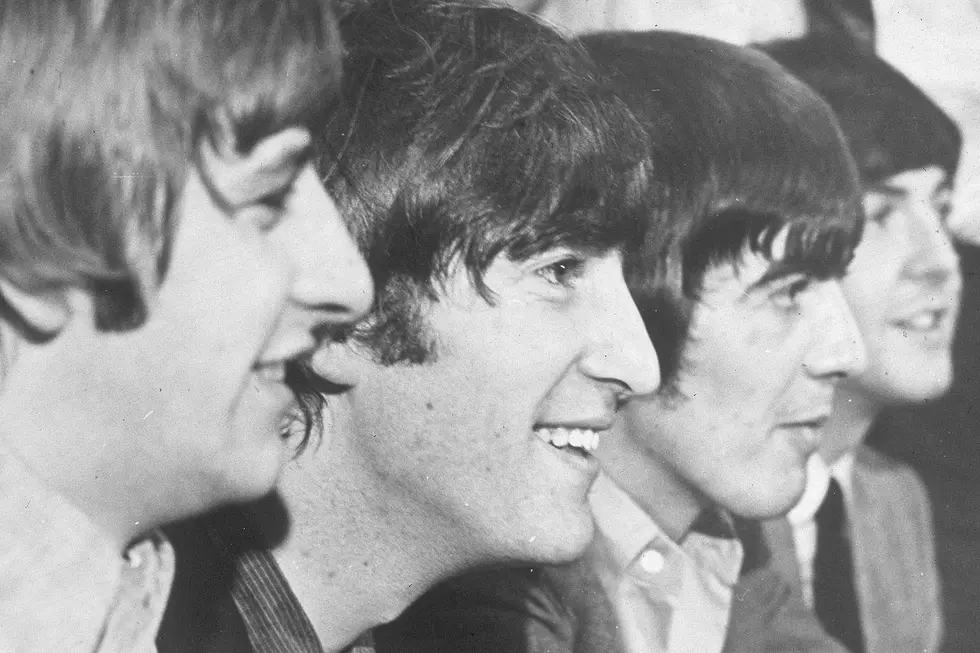
“Twist and Shout” (The Beatles)
“I’d go straight to the office to phone the lawyers in London to start trying to acquire the rights to all the things that John had said yes to,” Gotch recalls of the early stages of getting music for Ferris.
Hughes writing in The Beatles version of “Twist and Shout” without a backup plan was the thing that made this perhaps Gotch’s most harrowing outing with him. The Beatles had a policy of not putting their music in films at the time, and to double the difficulty, Hughes had already shot it by the time they started trying to get it cleared.
“The [parade] is the most expensive sequence in the whole film, and took days to shoot.” Without that song, the scene is a soft performance of “Danke Schoen” while a couple teens talk about their uncertain futures. Fortune smiled upon them when the owners of the publishing rights cleared the use of the song because it had been written not by Lennon and McCartney, but Bert Berns and Phil Medley.
“There was a certain sense that if the publishers have said yes and the label says no, it’s killing that other company’s income,” Gotch told Tim Greiving for the 2016 soundtrack liner notes. “I think that’s why we were able to get a Beatles song, because it wasn’t a Lennon and McCartney song.”
McCartney would later famously say to William Dowling that while he liked Ferris, the overdubbed brass band was lousy, and, “If it had needed brass, we’d had stuck it on ourselves!”
Hughes would later say on the commentary, “I felt really bad, because I, you know, like, I had offended a Beatle.” He makes the distinction, too, that this wasn’t some sort of remix, but just a practicality of having had a brass band on screen—part of most American parades, if not all of them—miming along to the song that played over the speakers on Dearborn that day.
Interestingly, that same year, Back to School also featured “Twist and Shout,” though this was as covered by Rodney Dangerfield.Annie Zaleski points out that “Twist and Shout” did chart again in 1986. “Both movies had an influence on the song’s resurgence, but I give Ferris Bueller an edge,” Zaleski says, pointing to the fact that it used the original song instead of a cover, and that nostalgia was helping oldies like “Stand By Me” chart again in the same year.
The last time they’d charted as The Beatles was in 1982 with a single entitled “The Beatles’ Movie Medley.” Curiously, while The Beatles didn’t re-release “Twist and Shout” as a single in the US, EMI Records Australia did release a 45 of the song B-sided with “Back in the U.S.S.R.,” featuring Matthew Broderick on the front and an ad for Ferris on the back, though the 45’s label itself has no reference to the film whatsoever.
Read More: How 'Ferris Bueller' Sent the Beatles Back to the Top 40
Excerpts are © Jason Klamm, courtesy of 1984 Publishing.
25 '80s Movie Sequels That Shouldn't Have Been Made
Gallery Credit: Corey Irwin
More From Ultimate Classic Rock