
55 Years Ago: Sly and the Family Stone Return to the Top With ‘Family Affair’
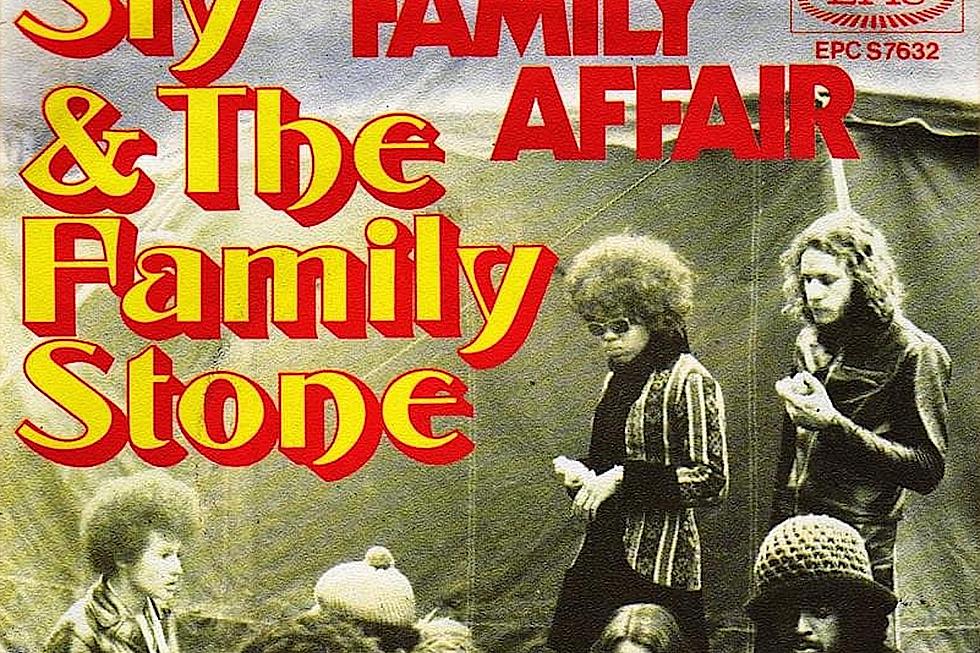
"Family Affair" was the first new song by Sly and the Family Stone in almost two years and their third and final No. 1 single. What it wasn't, however, was a family affair.
In the time since "Thank You (Falettinme Be Mice Elf Agin)" topped the charts in February 1970, Sly Stone had descended into a maze of drugs, missed concerts, paranoia and incessant overdubbing. Sly and the Family Stone canceled about a quarter of their shows over the following year.
Lawsuits, fines and management issues inevitably followed. "I got in fights with promoters, and I had a real attitude then – well, I kind of still do but not the same – so I walked away," Stone subsequently admitted to the Los Angeles Times. "But I forgot the people in the audience, the people who loved the music. The music meant a lot to people, and it comes with a responsibility."
Chaotic Sessions Somehow Lead to a Masterpiece
Attempts to get back on track were disheveled and sporadic. Set up at a mobile home studio, the former Sylvester Stewart would work at odd hours amid a group of strange and sometimes dangerous hangers-on. As sessions for the album that would become There's a Riot Goin' On continued, the Family Stone finally began to fracture.
Then the money started to run out. Stone asked for a $250,000 advance to catch up on the mortgage of a sprawling Los Angeles home formerly owned by John Phillips of the Mamas and the Papas, and ended up getting evicted when the label refused.
Listen to Sly and the Family Stone’s ‘Family Affair’
Clive Davis, president of the band's record company, had more personal concerns: "He was so far behind schedule that I was getting worried that his contract would expire," Davis said in Clive: Inside the Record Business, "and he'd sign with someone else for the large advance he was seeking."
Manager David Kapralik was forced to defend the drawn-out process in an interview with Rolling Stone: "Sylvester Stewart does not create 'product,'" Kapralik scolded. "Sylvester Stewart is an innovator, a source of new fusions, new concepts. You don't turn them out like you turn out pizzas. They're life statements."
READ MORE: Sly and the Family Stone Defined an Incredible Era With 'Stand'
Stone's sister Rose Stone was ultimately the only member of the once tight-knit multicultural group to appear on "Family Affair," a lean dope-sick groover. Later asked to confirm which instruments he played by Rolling Stone, Sly Stone memorably answered: "I've forgotten, man. Whatever was left."
Billy Preston actually ended up on electric piano, while Bobby Womack played rhythm guitar. Stone did the rest, including the programming of a primitive beat box in the absence of departed drummer Greg Errico. Bassist Larry Graham was the next one out the door, followed by Rose Stone.
With each departure, Sly and the Family Stone slid further and further from their late-'60s peak.
How 'Family Affair' Was Finally Completed
"Family Affair" represented the first steps in that journey of separation, but at this point, Sly Stone could still summon his muse toward greatness.
"The Riot album was for the most part overdubbed," Graham said in Miles Marshall Lewis' book Sly and the Family Stone's 'There's a Riot Goin' On.' "I would say that generally the others was us playing together with some overdubs. But Riot was recorded a totally different way than we recorded, in that I didn't play anything, to my recollection, with the rest of the band."
READ MORE: The Top Soul Albums of the '70s
In a weird way, however, Stone's unusual process was the strength of this song – and, to some degree, There's a Riot Goin' On. Recording take after take after take degraded the master tape quality to the point where everything had a murky mystery, presaging the Rolling Stones' similarly druggy Exile on Main St.
This single's drum-machine rhythms – which engineer Richard Tilles mixed to the level of Preston's keyboards – place "Family Affair" steps ahead of where R&B would soon go. A friction in the vocal interplay held everything together, as Rose Stone's soaring optimism was countered by Stone's oaken monotone.
Watch a Multitrack Playback of Sly and the Family Stone’s ‘Family Affair’
Kapralik intimated that Stone was being pulled in several directions by family members, and that worked as a creative impetus for the song. But the lyrics move well beyond the strains of interpersonal bonds – or in this case, the Family Stone – to look more deeply into societal ills.
"They may be trying to tear me apart, but I don't feel it," Stone told Rolling Stone. "Song's not about that. Song's about a family affair, whether it's a result of genetic processes or a situation in the environment."
READ MORE: How Sly and the Family Stone Summed Up Their Career-Making Start
At times, "Family Affair" seemed to be focused squarely on the difficulties of growing up in an unjust society. ("One child grows up to be somebody that just loves to learn," Stone croaks as the song begins, "and another child grows up to be somebody you'd just love to burn.") At other times, it seemed simply heartbroken.
Then there were the moments when Sly Stone came off like a narcotized sphinx: "You can't cry 'cause you'll look broke down, but you're cryin' anyway 'cause you're all broke down."

The World Almost Never Heard 'Family Affair'
Perhaps unsurprisingly, Davis initially refused to issue "Family Affair" as a single, saying Stone sounded "like he's stoned," according to A&R man Stephen Paley in Jeff Kaliss' I Want to Take You Higher. Paley's response: "Clive, it's okay. It won't matter; it's a great record." That's because "Family Affair" still felt like a sweaty dance number, despite all of those dark and disconsolate notions.
Everything starts with Sly Stone's rubber-band bass performance. Using a pick, rather than Graham's legendary thumbed technique, Stone helped point the way for a generation of as-yet-unheard disco singles. Preston's gospel-inflected turn on keyboard provided moments of back-pew ecstasy, while the light from Rose Stone's four-word mantra leaks into every corner.
READ MORE: The Top 10 Music Stars Signed by Clive Davis
Ironically, she'd been sound asleep when Stone awakened her, eager to get the vocal collaboration on tape. Rose dutifully recorded her part while thinking to herself, "Ah, we'll do it right tomorrow." Tomorrow never came: "That was the end; that was the recorded version that you heard – what I did that night," Rose told Goldmine. "But after I heard it later, I thought, 'Oh, this is great. I really like this.'"
Released in October 1971, "Family Affair" became the most successful single of Sly and the Family Stone's faltering career, holding the No. 1 position on the Billboard Hot 100 for three weeks. It also topped the R&B charts for five weeks. They never had another Top 10 hit.
Sly and the Family Stone Albums Ranked
Gallery Credit: Michael Gallucci
More From Ultimate Classic Rock